Food inflation is something that hits people hard. Like energy-price rises, it brings only pain for most of the economy. But, unlike energy inflation – which has seen the energy price cap for a typical household set to rise 26% in January – it is not showing up.
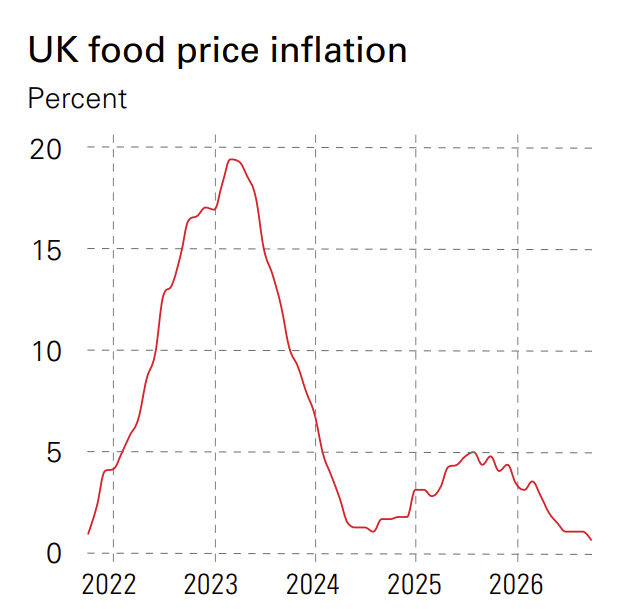
If you look at the breakdown of UK inflation, it is remarkable how low food-price rises currently look: just 0.9% year on year in October – in contrast, energy is already up 19.4% in the same month.
This may not fit with the sense that one gets when shopping, but at least part of that is due to the vast increase that has already happened over the past five years. Food inflation peaked much higher in 2023. Prices feel a lot higher because they are relative to a few years ago, but they are not – according to official statistics anyway – going up quickly right now.
Start your trial of MoneyWeek today
Get unparalleled financial insight, analysis and expert opinion you can profit from.
Start your trial
Sign up for MoneyWeek’s free twice-daily newsletter.
Join more than 165,000 subscribers and keep yourself informed with latest financial news, insights and expert analysis to help you understand what really matters when it comes to your finances.
Join more than 165,000 subscribers and keep yourself informed with latest financial news, insights and expert analysis to help you understand what really matters when it comes to your finances.
This may seem surprising given how the input costs that go into food production rose globally this year. For example, fertiliser prices were pushed up by the Middle East crisis, both through the direct impact on exports from the Gulf and the rise in global natural gas prices (gas is the feedstock for nitrogen-based fertilisers).
Yet “farmgate prices” – what farmers actually receive for what they produce – have fallen on average this year in the UK, Europe and the US. This top-down average hides some differences (dairy prices are generally weak, cereal prices are up), but overall is much softer than you might expect. To some extent, this reflects buyers (eg, supermarkets) squeezing their suppliers as they try to keep retail prices down, but one has to question how long that state of affairs can be sustained if input costs are ramping up.
Agricultural commodities futures offer little or no sign that markets expect higher food inflation over the next year, they point to prices being flat to down. One reason that markets are sanguine is that supply looks relatively robust: we have a cyclical global milk glut and expectations for good harvests in producers such as Australia and Argentina. However, there is also a certain amount of optimism for less strife in 2027. This includes the fading of the energy shock (futures forecast an easing in fertiliser prices next year) and hopes of a ceasefire in Ukraine (which would release large stocks of grain onto world markets).
One or both may well come to pass. However, the Bank of England is already expecting food-price inflation to rise to 4%-5% next year as higher costs are finally passed on. The risks that this will be sustained must be as least as likely as it fading, given the world is more prone to shocks than pleasant surprises these days. Food is not a huge part of the inflation basket in the developed world – food inflation sits at 10% in the UK – so we should not overestimate the direct impact. However, it would be yet another small pressure in the post-pandemic trend towards higher inflation that markets have still not fully accepted.
This article was first published in MoneyWeek's magazine. Enjoy exclusive early access to news, opinion and analysis from our team of financial experts with a MoneyWeek subscription.