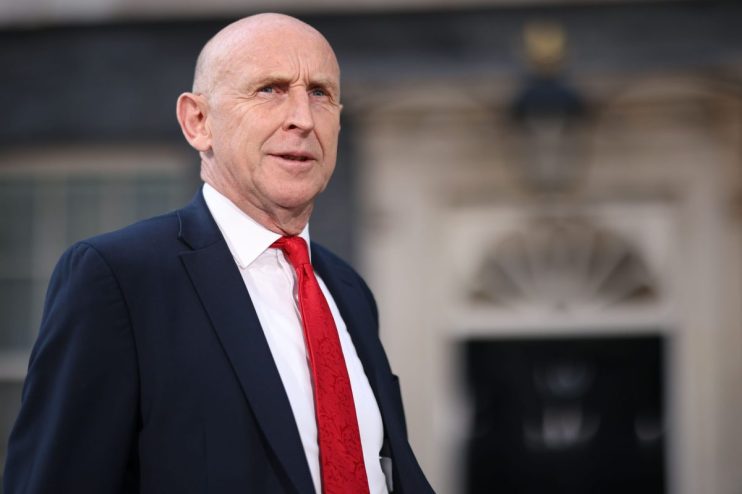
Chancellor John Healey has been urged to avoid interfering with the competition and merger regulator as former Treasury officials blamed the UK’s lagging productivity on a lack of dynamism in the economy.
A new paper by top economists who worked in senior roles at the Treasury claimes most of the UK’s slowdown in productivity growth can be attributed to a lack of competition.
Research focused on the struggles faced by new firms to break into markets even as the likes of Octopus Energy, Lidl and Revolut have challenged larger businesses and helped make the economy “more productive”.
John Kingman, the chair of Barclays and Great British Railways who was previously second permanent secretary at the Treasury, and Shriti Vadera, a former adviser to Gordon Brown, said the government should stay out of merger decisions.
The senior business figures pointed out that the firms under five years old made 10 per cent of all business sales in 2021 compared to 18 per cent in 2005.
Stay in the know
Three daily briefings with the key market moves and top business and political stories.
SUBSCRIBE HEREThe intervention challenges Treasury ministers’ growing interest in pushing the Competition and Markets Authority (CMA) to force mergers through after former Chancellor Rachel Reeves directed the regulator to support growth and focus on industrial strategy sectors in 2025.
Healey must ’embrace power of competition’
The paper, published by King’s College London, said the government should “reassert” the CMA’s independence and competition mandate while ministers should be kept out of individual merger decisions other than a small set which are key to public interest.
Healey and business secretary Jonathan Reynolds were also urged to allow “failing firms to fail”. The paper explained that there should be special administration options for more critical sectors such as telecoms after ministers intervened to allow BT’s takeover of Talktalk, just as the government has considered bringing Thames Water under temporary public control given its financial struggles.
Government decisions that potentially undermined growth included former Chancellor Jeremy Hunt’s criticism of the CMA’s decision to block Microsoft’s $69bn purchase of the games company Activision Blizzard and Reeves’ attacks against former CMA chair Marcus Bokkerink, according to the two prominent business figures.
At the time of a proposed takeover of Activision, which was later cleared by the CMA in late 2023, Microsoft chiefs hit out at the CMA as they said the decision showed the UK was “clearly closed for business”.
They argued that such ministerial interventions set a precedent for other regulators to “not upset powerful firms”.
“If the government wants higher growth, as it says it does, it needs consciously to embrace the power of competition and disruption and do everything possible to drive it,” Kingman and Vadera wrote.
“UK economic history shows plenty of examples where competition authorities and economic regulators, often working alongside the government, have successfully done this, with large economic gains.
“More recent governments, however, appear to have lost this impetus and embraced a very different philosophy; they appear to have come to see active procompetition policy as a threat to growth, rather than a driver of it.”
“The implicit hope in all this seems to have been that if competition authorities can be reined in, incumbent firms would be happier and would respond by investing more in the UK.”
Public procurement strategy could push up costs
The paper also hit out at Healey’s push to ‘buy British’ in public procurement as it called for an overhaul of the system that currently “entrenches existing providers”.
It said Healey and Louise Haigh’s efforts to boost UK firms by contracting them for government services could be costly for taxpayers.
Several firms have hit out at the CMA for heavy-handed interventions on business practices. Google executives said the CMA’s proposals to require the company to include AI assistants as alternatives to its search engine as “unlawful”, adding that it would “undermine competition”.
The CMA, Treasury and business department have been contacted for comment.