rom the Avon ladies to the former Sex Pistols lead singer John Lydon selling butter, personal endorsement of products is a well-trodden form of marketing with significant gains – and pitfalls. More recently, the practice of teaming up with social media influencers has become a boom in the ad industry over the last decade – and came firmly into the spotlight this week.
First, the Guardian revealed that Unilever, the consumer goods behemoth behind huge brands including Dove soap to Hellmann's mayonnaise, had slashed its almost £100m TV ad budget and was ploughing funds into online influencer marketing instead.
Then, a furore broke out over Andy Burnham's interview with a TikToker, which involved filming a parody of Hugh Grant's famous Love Actually dance inside 10 Downing Street.
The attempt to burnish Brand Burnham was further tarnished when it emerged that two more influencers, who had been invited to events at the prime minister's residence, had posted clips filmed on the steps of No 10 featuring lewd, explicit or inappropriate lyrics.
The incident reignited the debate about the risks of tapping the "wild west" of online influencers and content creators in order to reach younger audiences increasingly trading TV for social media channels.
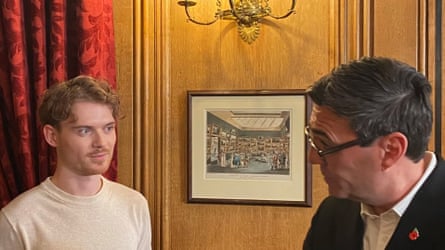
Burnham has said he will not apologise for his headlong rush to embrace influencers to reach young audiences – a government spokesperson meekly explained that content creators are "obviously responsible" for what they post – but the fallout is a stark reminder of the potential problems.
Nevertheless, brands big and small are piggybacking off the potential sales that can be drummed up by targeting the millions of ardent fans of influencers.
By the end of the decade more than $9bn (£6.9bn) will be spent on the so-called creator economy, more than brands will spend on running ads on traditional TV and streaming services, according to the consultancy Madison and Wall.
"The oldest marketing strategy of all time is human advocacy and recommendation," says Jessica Tamsedge, the chief executive of the ad agency Dentsu Creative UK and Ireland. "Whether it is the Avon lady or celebrity endorsement … now it is about the different types of voices that are enlisted to do different jobs for businesses and brands. However, that doesn't mean using them is automatically good marketing.
"When you go into a creator-led strategy there is enormous variation between successful and unsuccessful campaigns."
Earlier this month, Space NK faced a consumer backlash for organising a trip for celebrities and influencers, including Stacey Solomon and Alison Hammond, to the five-star country house hotel in Surrey to launch the beauty product retailer's festive range.
Consumers criticised the luxury staycation – which included beauty treatments, hair and makeup by brands including YSL and GHD and a lavish Christmas party – as being "tone deaf" given the pressure on consumers' finances, particularly as the festive period piles pressure on budgets.
Nevertheless, it can be argued that the risk of getting it wrong can potentially be far outweighed by the reward of getting right.
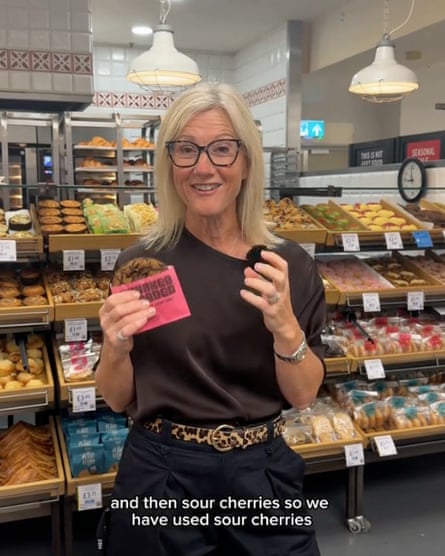
In May, Kathryn Turner, the director of product development at M&S Food, started posting on her own TikTok with about 30 followers and a couple of young staff supporting her.
She has quickly become a viral sensation - Marks & Spencer's gen-Z marketing dream – with about 700,000 followers across TikTok and Instagram.
A video released this month in which Turner championed a new chocolate and cornflake cookie, prompted long queues and Covid-style scenes of panic buying as people rushed to bakery counters at some M&S stores.
Meanwhile, Unilever said this week it had upped its network of influencers and creators to more than 500,000, an almost seven-fold increase in two years.
When Fernando Fernandez took over as chief executive in March last year he said he wanted "an influencer in every zip code in the globe", a strategy that has completely upended how the Anglo-Dutch company spends its €8bn (£6.7bn) annual marketing budget.
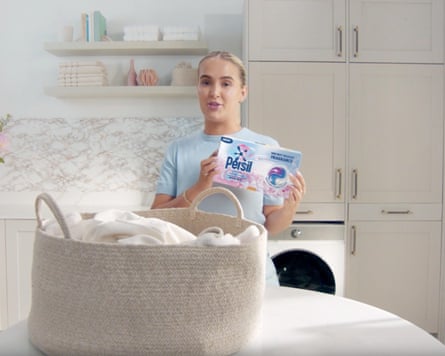
In the UK, where Unilever has historically been a top-three TV advertiser, it has more than halved its budget, including almost completely disappearing from Channel 4, one of the country's biggest broadcasters. Unilever's partners have included the former Love Island contestant Molly-Mae Hague on laundry detergent and fabric conditioner brands and the beauty creator Jen Chae.
Understandably, the TV industry is up in arms about the idea that running ads in The Great British Bake Off and I'm A Celebrity… Get Me Out Of Here! may no longer be the best use of marketing spend.
"TV advertising is the decision that makes other marketing decisions better," says Lindsey Clay, the chief executive of Thinkbox, the marketing body for commercial TV in the UK. "Advertisers shouldn't sacrifice what works hardest for what feels newest. Not every advertiser is following the evidence.
"If they were, TV would be the last place they'd cut to fund influencers. Influencers clearly have their place, but shifting money from TV to fund them is self-defeating."
Despite the occasional misfire, the influencer and creator market has rapidly matured, according to the Influencer Marketing Trade Body (IMTB), which was set up to professionalise the industry in 2021. That was the year that the UK ad watchdog "named and shamed" reality TV stars for repeatedly failing to tell followers when they were paid to promote products in posts.
"At that time influencer marketing was often referred to as the wild west," says Scott Guthrie, the director general of the ITMB. "Five years ago it was a very different market, including what influencers did. We have done the hard yards raising awareness and helping to shape the rules for influencers, it has professionalised at speed and is now part of the fabric of advertising. Although there are still some misconceptions that influencers work outside ad rules and regulations."
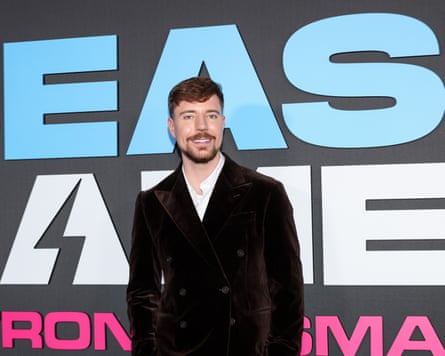
For some such as Jimmy "Mr Beast" Donaldson, who has more than 800m followers and is the biggest creator on YouTube, being an influencer can be spun into an incredibly lucrative career.
Donaldson, who created the world's most expensive reality TV show in a deal with Amazon, is touted to become YouTube's first billionaire creator.
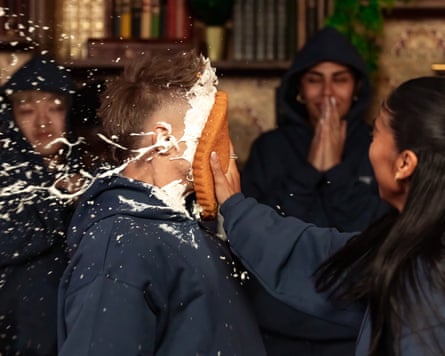
And last year, the British YouTube collective the Sidemen sold out the 90,000-seat Wembley stadium for a charity football match against a YouTube Allstars team, which included Donaldson.
Brandon Baum, a British YouTuber specialising in visual effects who has more than 25 million subscribers, now has a creative and marketing services studio, which has 50 employees and a clients list that includes Virgin Media O2, Netflix, Lego, Manchester City football club and the mobile service Giffgaff.
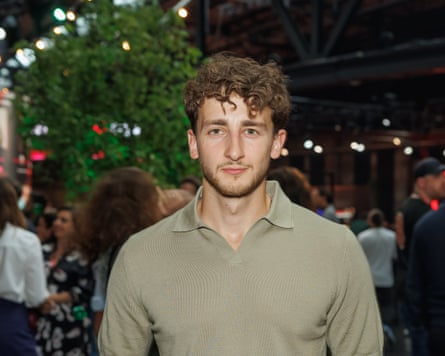
"I feel like a kid in a candy store, there is more opportunity than we have the ability to take on," Baum says. "It is a very interesting time and I've decided to be disciplined and that I am better off specialising in a small handful of areas. You don't want things that take you further away from the thing that started it, content. It is about what are the right things to be saying no to."
However, despite the huge marketing budgets increasingly pouring into the industry the vast majority of influencers and creators do not make a full-time living from it.
According to a report by the marketing software platform CreatorIQ published in August, two-thirds of creators earn less than $10,000 a year while more than 60% do not rely on content creation as their primary income. Just 5% are big earners, making more than $100,000 a year.
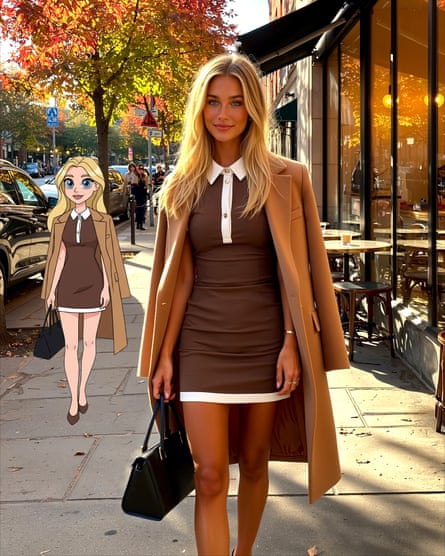
And while the development of AI is an exciting new tool for influencers and creators, it also poses a risk to their livelihoodamid the rise of the virtual influencer.
Last summer, "It Girl" Mia Zelu went viral after her pictures at Wimbledon's Centre Court, drinking Pimms and wearing stylish outfits, drew hundreds of thousands of followers. She was AI generated.
"Virtual influencers are a massive thing," says Tamsedge. "The interesting thing is that research has shown us that when you reveal these individuals are AI generated it doesn't dissuade people from following them and remaining interested. But just because you can do more with AI doesn't mean you should. However, it is like a new cohort of talent coming in as new entrants in the influencer market."