A spate of prominent departures and years of public battling over its ownership have ensured the Telegraph's newsroom has been no stranger to internal intrigue and speculation in recent times.
Even by its own high standards, however, its offices have been fraught with rumours about its leadership this week.
Speculation swirled about the future of both its editor, Chris Evans, and his loyal deputy, Rob Winnett. It was accompanied by days of long, hushed meetings between senior figures at the title, now under the ownership of the German media company Axel Springer.
The intrigue was heightened by Evans's apparent early return from a trip to the US. Suggestions did the rounds that both editor and deputy could be leaving – a rumour dampened by Evans's continued presence in the newsroom.
In the event, it emerged that only Winnett was departing. Winnett, who led the Telegraph's coverage of the MPs' expenses scandal, is heading to the title's bitter rightwing rival, the Daily Mail. He has been installed as its chief content editor, instantly elevating him as a likely successor to the Mail's editor, Ted Verity.
However, at the Telegraph, Winnett's departure is being seen in the light of widespread concerns about the title's direction under its new owners.
Axel Springer and its all-powerful chief executive, Mathias Döpfner, swept in to buy the titles for an eye-watering £575m earlier this year, with promises of investment and expansion. However, five months into Axel Springer's tenure, insiders say they are only seeing cuts – and no discernible long-term strategy.
"I don't think they have a particular plan – they clearly want money saved," said one staffer. "They've clearly given Evans a target of savings to make. In terms of a plan, it's all very vague."
Winnett's departure, one insider said, was "a huge loss". Winnett had been part of a team who headed to Florida to scope a base for an expanded US operation. So far, solid plans have not emerged.
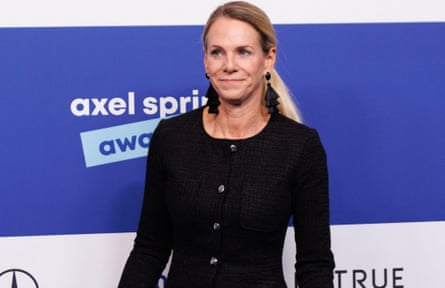
It follows a recent town hall meeting between journalists and the Telegraph's new chief executive, Carolin Hulshoff Pol, at which reporters asked a series of questions that they felt went unanswered, and cuts in which large numbers of employees were told they were being made redundant, including senior figures in the newsroom.
Hulshoff Pol said the strategy was to reinvent the reader experience, build new revenue streams and grow internationally.
Reporters asked for more details about the wider plans behind the cuts and what the company meant in its repeated insistence that the Telegraph would become a "global, AI-powered premium media and intelligence business". Staff remain unclear what the use of AI will entail.
There is also confusion about who is making the cuts. Evans is credited with keeping the Telegraph operation going during three years in which it was without an owner and unable to take major, strategic decisions. He now also appears to have been tasked with making cuts for Axel Springer. Some believe Evans is being used by the company to carry out "the bulk of the current bloodletting".
A source said the company was having to take "difficult proposals that we believe are necessary for the future of the business".
Some staff had initially detected a change in the Telegraph's politics in the months after Axel Springer's purchase. They presumed the loosening of ties with Reform's Nigel Farage and the departures of some of its most rightwing writers, such as Allison Pearson and Sherelle Jacobs, were part of a shift towards a global centre-right audience.
However, many now believe the changes so far have been more about costs than politics.
Elsewhere, there has been no such turn to the centre. The Telegraph's new US podcast, The Right Track with Poppy Coburn, most recently featured the rightwing media host Steve Bannon, an ally of Donald Trump.
It has left Telegraph staff scratching their heads about the takeover. Many had expected Axel Springer to arrive with money to spend. Insiders said executives seemed to be focused on boosting advertising.
The cuts are being made despite the Telegraph making underlying profits. "This is a business that generates healthy margins, healthy profits," said Alex DeGroote, a media analyst. "So at face value, the restructuring – all these redundancies – is not because of financial pressures.
"Even allowing for the fact that the advertising market this year has probably been a bit soft, both print and digital, the scale of the restructuring would suggest that this is quite a deep strategic rethink. Basically, I'm afraid it points to AI."
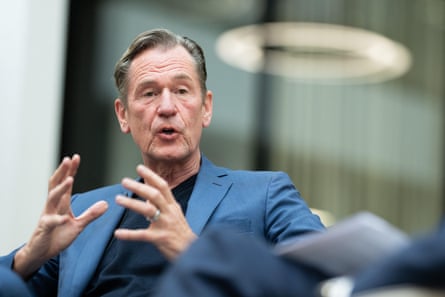
It has all focused attention on the intentions of Döpfner, a billionaire who has made numerous attempts to buy media assets in an attempt to establish himself as a modern media mogul. He made an unsuccessful bid for the Financial Times in 2015 and subsequently bought Business Insider and Politico, and has expressed interest in the Wall Street Journal. It had been assumed he would use the Telegraph as a vehicle to compete against right-leaning media in the US.
There have recently been reports that Döpfner has been interested in acquiring a stake in TikTok's European operations. He is said to have discussed the idea with the US ambassador to France, Charles Kushner – the father of Trump's son-in-law Jared Kushner – in January.
It has made Telegraph staff wonder where they stand in his plans.
"It's all very well getting rid of the people that come in with stories and write them and produce them and present them to you on a plate, but what are you then going to do?" said one journalist at the town hall meeting. "You don't get a room full of journalists together and not have answers."