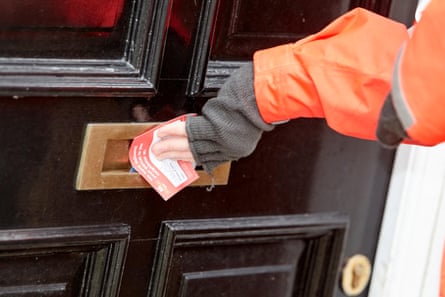
hristmas is coming, so you are stocking up on presents courtesy of the Black Friday sales. There are lots of deliveries coming to your home, so you are not surprised to get back and find a red "Something for you" card from Royal Mail on your doormat.
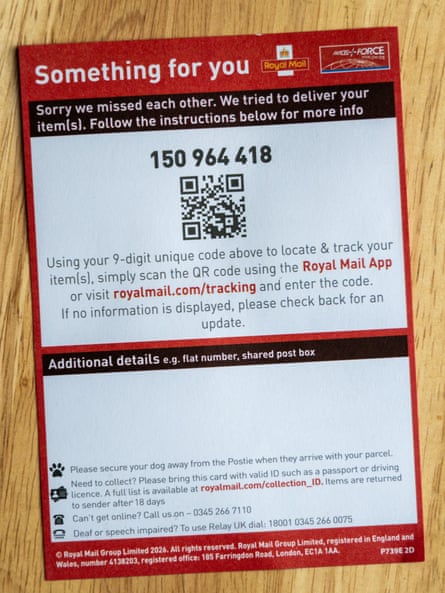
These are left by the postal service when it attempts to deliver an item. The card has a QR code and invites you to scan it to pay the customs charge that is due.
When you click on the link, you are taken to what looks like the Royal Mail website and asked for your bank card details to pay a £3 fee.
But during the next few weeks you notice a series of transactions on your bank account from retailers you have never bought from.
Your bank details have been compromised as a result of a fraud where criminals drop near-identical copies of Royal Mail's "Something for you" cards through letterboxes.
Instead of the QR code directing you to the postal service site, you have been taken to a convincing clone site and asked for your details.
The scam relies on people trusting that the card is legitimate, as the real Royal Mail cards do have QR codes, and you may be used to getting them through the door.
Jake Moore, an adviser for cybersecurity company ESET, says people may be less likely to guess that there is a digital scam involved as they are holding a card from what appears to be a trusted source.
"It just feels more trustworthy than scam texts and emails because it's physical," he says.
What it looks like
Royal Mail introduced new "Something for you" cards with QR codes over the summer.
By scanning the code, and putting in your postcode, you can see where your delivery is. A nine-digit reference number on the legitimate card will already be visible on the real website when you get through.
Fraudsters have started to produce similar cards with QR codes, but these may ask for money for redelivery, or for a customs charge.
Royal Mail says: "The appearance and wording can vary, but the intention can be to obtain payment or financial information from customers."
If someone scans the fake QR code, they are likely to be taken to a site which is a mirror image of the real one but which will ask for your bank details.
You will usually only be asked to pay a small amount of money, so that it appears legitimate. But entering your bank details leaves you open to future attacks.
"It is perfect timing, of course. Everyone's expecting parcels and they may let their guard down," says Moore.
What to do
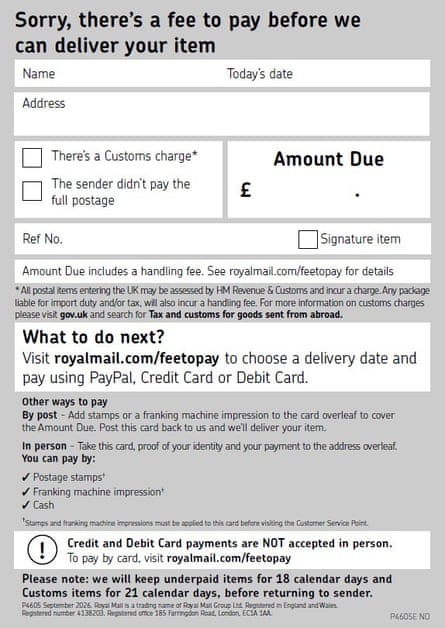
Royal Mail has advised people to be aware of the new fraud. Crucially, if someone legitimately needs to pay a charge, they will receive a grey "Fee to pay" card – not the "Something for you" card.
"We would encourage customers to remain vigilant and remember that Royal Mail will never ask for payment to rearrange a missed delivery," it says.
If you are unsure, go directly to the Royal Mail site or app and put in the reference number to see details of your order. Potential scams can be reported to Royal Mail via email.
If you find you have shared financial information with fraudsters, contact your bank immediately, as well as Report Fraud, the national fraud investigation body. Then change your passwords.