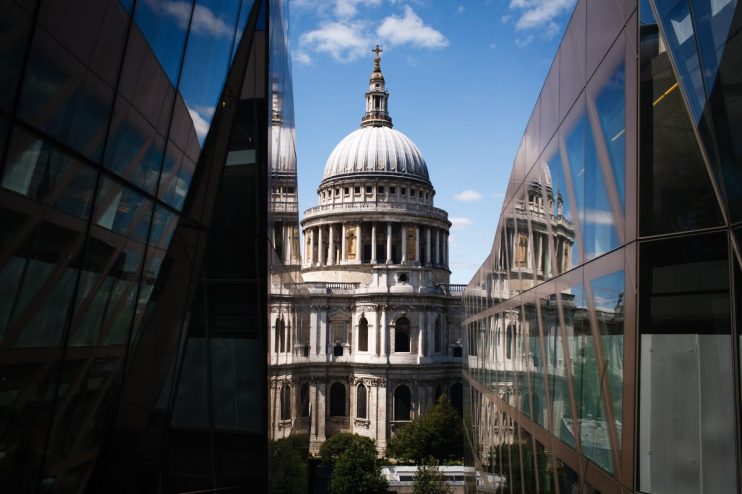
London’s next Mayor must champion architecture, the built environment, and bold city-making to drive an urban renaissance and restore the city’s civic ambition, says Jay Morton
The race to be the next Mayor of London has started and it’s the Conservatives who have been first out of the blocks
Being Mayor of London is like being Spiderman: with great power comes great responsibility – but also opportunity. Whoever wins truly has the chance to shape one of the greatest cities in the world.
Not just theoretically or politically but physically. The Mayor has powers to reshape the city, from transport infrastructure and building homes to ensuring the multiple villages that make up London thrive. As an architect, I always feel that London does best when its Mayors take a passion and interest in architecture and the built environment.
London’s architecture is the jewel in its crown. I moved to London in the Blair era, eager to study architecture at the Bartlett. I arrived just weeks after the 7/7 bombings, and London’s resilience made me proud. “We are Londoners” was everywhere, a shared determination to keep going. Alongside it was a tangible ambition to build. London had won the Olympic bid and it felt like anything was possible. London’s skyline was transformed. There was ambition about what London could become. Ken Livingstone appointed Richard Rogers as his chief adviser on architecture and urbanism, and the architecture and urbanism unit brought design into the heart of City Hall. Architecture wasn’t simply something that happened as a consequence of development. It was part of a wider vision for the capital.
Stay in the know
Three daily briefings with the key market moves and top business and political stories.
SUBSCRIBE HEREBoris Johnson also took an interest. Like or loathe the Garden Bridge, the proposed Thames Estuary airport or the ArcelorMittal Orbit, they were big ideas. They showed an appetite for thinking about London at a city-wide scale.
Look north too. As Mayor of Greater Manchester, Andy Burnham put place at the centre of his politics. He used Mayoral Development Corporations to drive regeneration from Stockport to Old Trafford.
Sadiq Khan’s approach has been quieter on architecture, although his mayoralty has faced huge challenges. On air quality, particularly through the expansion of ULEZ, he has demonstrated the scale of change that mayors can pursue.
However national politics and international events shape cities too. In the last decade we’ve had Brexit, Covid leading to a seemingly endless drive to do everything for less, even at the expense of civic ambition. The ambition to merely survive not thrive.
The relocation of City Hall from central London to the Crystal in the Royal Docks feels like the epitome of this. A decision driven by the desire to save rather than a vision of what London’s civic heart should look like. And in any case, as Lord John of Southwark, former council leader, argued on my Architects for Change podcast, even those savings warrant scrutiny.
Somewhere along the way, we seem to have lost the confidence to think big about our city. Now, London needs that confidence back.
Urban renaissance
We need an urban renaissance and we need to build. London’s built environment is worth £111bn a year, 19 per cent of the city’s economy, and supports more than 620,000 jobs. But the construction sector currently feels worse than 2008. London’s housebuilding is collapsing and the money is leaving.
London’s success has always depended on its ability to attract talent, investment and ideas. But increasingly, the very people who make London such a creative, vibrant and exciting place cannot afford to live here. That includes the young architects, designers and builders who will actually shape the city.
London is currently home to some of the world’s most celebrated architecture practices, alongside hundreds of smaller studios. London’s chartered practices alone turn over £2.8bn a year. They create the buildings, streets and neighbourhoods that act as attractive adverts for a London people want to visit, work and live in.
So we need to think seriously about what a resilient city looks like in 2030 and beyond. How do we adapt to rising temperatures, flooding and extreme weather? How do we create neighbourhoods where children can play, older people can thrive and everyone can move around safely?
How do we make London greener, healthier, more affordable and more beautiful?
The answer lies not just in architecture and creative urbanism but political leadership.
The next Mayor, whoever it is, whatever their rosette needs to champion the built environment, not simply as an economic driver, but as one of the most powerful tools we have to tackle inequality, respond to climate change and improve people’s lives.
And frankly I want some fabulousness too. Some sparkle. Buildings and public spaces that inspire us and that Londoners can feel proud of. Why not appoint a City Architect to drive that collective longer term ambition?
Of course, London’s finances are challenging. The housing delivery model is under severe strain, and the next Mayor will inherit difficult decisions. But that makes ambition more important, not less. We need action to get London building again, not just for today’s Londoners who desperately need homes, but for Londoners of the future too.
I want to see the next Mayor be passionate about the built environment and give London its mojo back. I’m calling for nothing short of an urban renaissance.