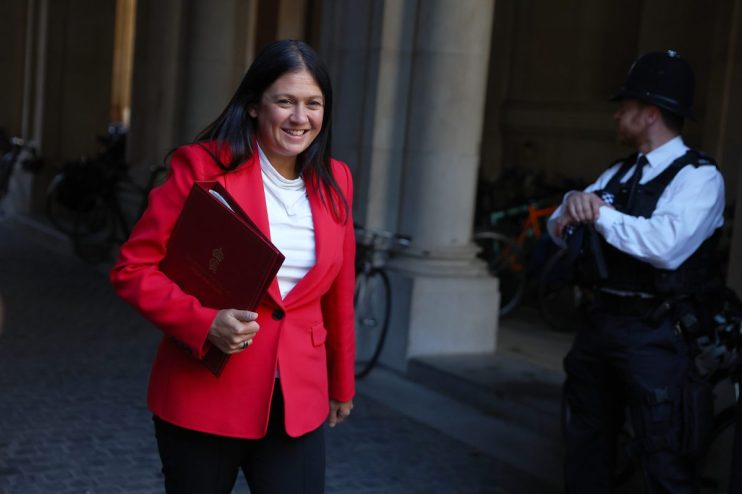
Culture secretary Lisa Nandy has warned Ofcom over its ability to police the online world, saying that the “jury is out” on whether the regulator is capable of delivering on its expanding remit.
Speaking to Sky News on Thursday, Nandy said she was in active discussions with the watchdog’s new chair over its performance, as ministers prepare to introduce Britain’s under-16 social media ban.
“I think the jury is out about whether they can do what we’ve asked them to do,” she said.
“I think there’s an awful lot that Ofcom does and that we’re asking it to do, but this is a conversation that I’m actively having with the new chair of Ofcom, who was brought in to shake things up.”
Asked whether she was putting the regulator on notice, Nandy said she would prefer to take a “partnership approach”, but stressed the urgency of tackling online harms.
Stay in the know
Three daily briefings with the key market moves and top business and political stories.
SUBSCRIBE HERE“I’d prefer that we all stepped up and understood the urgency and the responsibilities that we have,” she said.
In September, Nandy admitted there was “a problem” with the watchdog’s ability to enforce online safety rules, warning that “laws are only as good as the ability to enforce them”.
She also signalled an appetite for further regulation of technology companies, describing the forthcoming social media ban as a “staging post to what must be a very active interventionist state”.
Pressure mounts on Ofcom
The comments come ahead of Britain’s planned ban on under-16s accessing high-risk social media platforms, including Instagram, Tiktok, Snapchat and Youtube, from March.
Ofcom will be tasked with overseeing the restrictions, alongside additional safeguards for 16 and 17-year-olds covering addictive features such as infinite scrolling and algorithmic recommendations.
The regulator has already faced a series of legal challenges from technology giants over the scope of its powers under the Online Safety Act.
Earlier this month, the High Court rejected a challenge brought by Meta, Whatsapp, Tiktok and X against Ofcom’s demands for detailed information about their content moderation practices, strengthening its ability to scrutinise platforms.
Ofcom has also announced tougher requirements for technology companies to detect illegal content, including child sexual abuse material, amid concerns that artificial intelligence is accelerating its creation and distribution.
The watchdog can impose fines of up to £18m or 10 per cent of qualifying global annual turnover for breaches of the Online Safety Act.
But Nandy’s latest intervention suggests ministers are increasingly concerned about whether the regulator has the capacity to turn Britain’s expanding online safety legislation into effective enforcement.