The current AI infrastructure-building boom and the railways of the early 1800s are often compared by analysts and commentators. At the peak of railway mania, infrastructure spending was consuming around 2.2%-2.3% of GDP, with some countries spending as much as 5.4%, a figure that until recently eclipsed that of spending on AI.
However, this simple comparison overlooks how transformational the early-1800s boom was for the global economy. We take for granted now how easy it is to travel around the world and how quickly goods get from A to B. But 200 years ago, before the US had built its transcontinental railways, it took several weeks to travel from one side of the continent to the other. After the advent of the railways, the journey took a week.
Undoubtedly, AI will transform the global economy, but its infrastructure has an incredibly short shelf life. The AI chips developed by companies such as Nvidia are only cutting-edge for a year or two. Companies are making every effort to extend the life of GPUs and data centres, but realistically they still need replacing every five to ten years. By contrast, we're still using most of the infrastructure created during the 1800s railway boom. In the UK, rail track should be replaced every ten years or less (although plenty of sections date from the 1980s), but the civil engineering that formed the foundations of these lines often dates from the 1830s. You only need to look at the mess that is HS2 to understand why the UK, and plenty of other countries, still rely heavily on infrastructure developed 200 years ago.
Start your trial of MoneyWeek today
Get unparalleled financial insight, analysis and expert opinion you can profit from.
Start your trial
Sign up for MoneyWeek’s free twice-daily newsletter.
Join more than 165,000 subscribers and keep yourself informed with latest financial news, insights and expert analysis to help you understand what really matters when it comes to your finances.
Join more than 165,000 subscribers and keep yourself informed with latest financial news, insights and expert analysis to help you understand what really matters when it comes to your finances.
The privatisation of Britain's railways
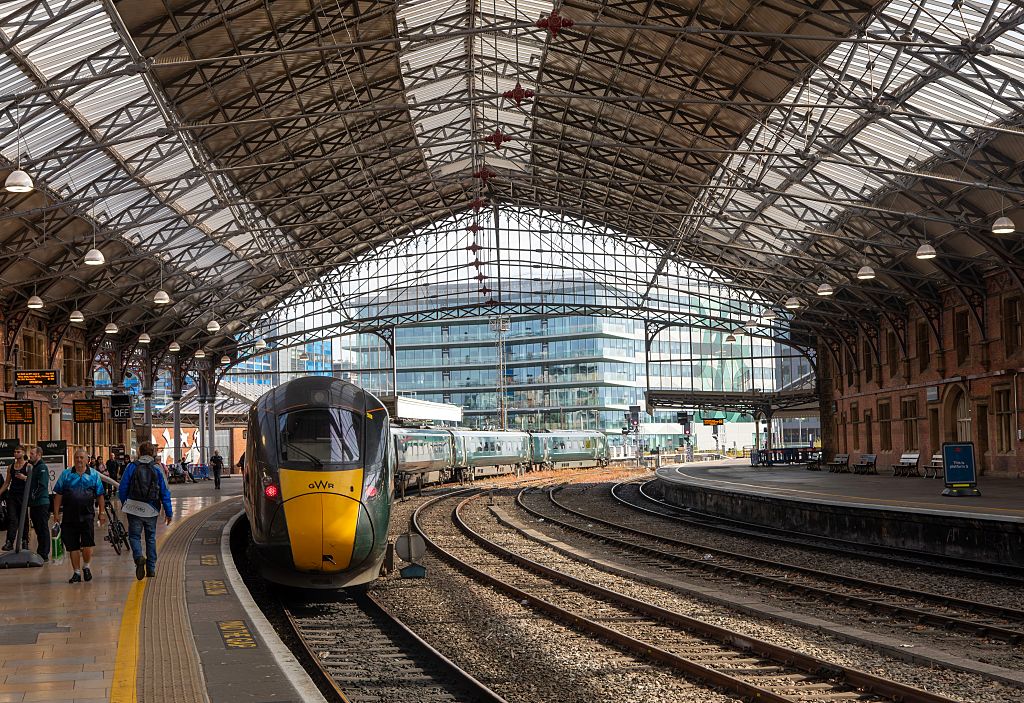
Private capital drove the railway mania of the 1800s, but the industry has changed significantly since then. Most rail operators worldwide are state-owned. The June 2026 edition of the Railway Statistics Synopsis, published by the International Union of Railways (UIC), provides the definitive guide. It highlights more than 100 different railways in Europe, eight in the Middle East, ten across America and another hundred or so in Africa and Asia Pacific. It groups operators and owners together. For example, in the UK, it only counts Network Rail, Eurostar International and HS1 (the company that owns the high-speed track running across the southeast). In the US, it only counts state-owned Amtrak and the Association of American Railroads, even though there are many more publicly listed companies (more on that later).
Most countries operate a market in which the state owns the track, rolling stock, trains and associated infrastructure. However, in some markets – the UK being an example – different entities own these different assets. Trains in the UK were operated until recently by firms under franchise agreements while the state owned the track via National Rail. Rolling stock was, and still is, owned by a few private leasing companies. These so-called “Roscos” own the rolling stock and rent it to the railway operators. Examples in Europe include Beacon Rail, Akiem and Nexrail. In the UK, there are three main Roscos: Angel Trains, Eversholt Rail Group and Porterbrook, which own a collective 70% of the country's rolling stock.
These companies can be immensely profitable. As reported in February 2024, Roscos paid their owners dividends of £409.7 million in the 2022-2023 financial year while booking a net profit margin of 41.6%, up from 14.3% the previous year. That year was an anomaly, but the profitability of these firms should not be underestimated. In the last financial period, April 2024-March 2025, the Office of Rail and Road (ORR) noted that Rosco's average net profit margin was 19% and the companies paid £275 million in dividends to shareholders.
The UK rail industry spent a total of £4.1 billion on rolling stock in the last financial year, according to the ORR report – more than Network Rail spent on maintenance (£2.5 billion) and renewing assets (£3.7 billion). These firms don't just lease rolling stock to government entities, they also lease to freight rail operators, which are often privately owned. The upfront capital required to buy locomotives and rolling stock is significant, which is why the government and other businesses turned to leasing companies. At the end of 2025, for example, Angel Trains owned slightly fewer than 4,000 passenger rail vehicles, with an adjusted asset value of more than £4.1 billion. But most of these assets have lifespans exceeding 25 years. That means returns on investment are significant.
Railway stocks to consider
There are some publicly listed railway stocks for investors who want to take a look at this part of the market. In the US, builds freight and tank cars for other operators and owns 140,000 railcars for lease. owns more than 200,000 railcars across Europe, North America and India, and has historically manufactured railcars, but is now expanding into leasing. Other options include owned by First Citizens BancShares, and or (owned by Berkshire Hathaway, NYSE: BRK.B).
One option in Europe is the tiny , which manages €1.3 billion worth of freight railcars, river barges and containers. The London-listed investment trust holds full ownership of BeNEX, an investor in both rolling stock and train operating companies, as well as a 8.4% stake in Angel Trains, the UK's largest Rosco. The biggest pure play operator, GATX, which recently expanded by acquiring the assets of Wells Fargo's rail leasing arm, has returned 15.4% a year over the past decade, outperforming the MSCI All-Country World index's 12.9%.
There are around 40 listed businesses globally that run freight or passenger rail services. Japan has the highest concentration of publicly traded passenger railways, including the likes of , which in 2024 raised ¥348.6 billion ($2.3 billion) in Japan's largest initial public offering in six years. Peers include Toyko-listed , , and . In Asia, there's also Hong Kong's and Thailand's , which owns multiple rail and transit systems in Bangkok, as well as a marketing business and real-estate development arm.
In Europe, owns and operates the Channel Tunnel and the LeShuttle railway service, although it does not own HS1, the high-speed track that connects to the tunnel on the UK side. That's owned by the government and managed by HS1 Limited. A consortium that includes InfraRed Capital Partners, HICL Infrastructure, South Korea's National Pension Service and Equitix owns this entity. Back in Europe, is a Swiss tourism and mountain railway company (one of its trains is pictured above) and is a listed Italian group that owns rolling stock, motorways, public bus services and passenger rail services in Lombardy.
Plans for growth in Tokyo
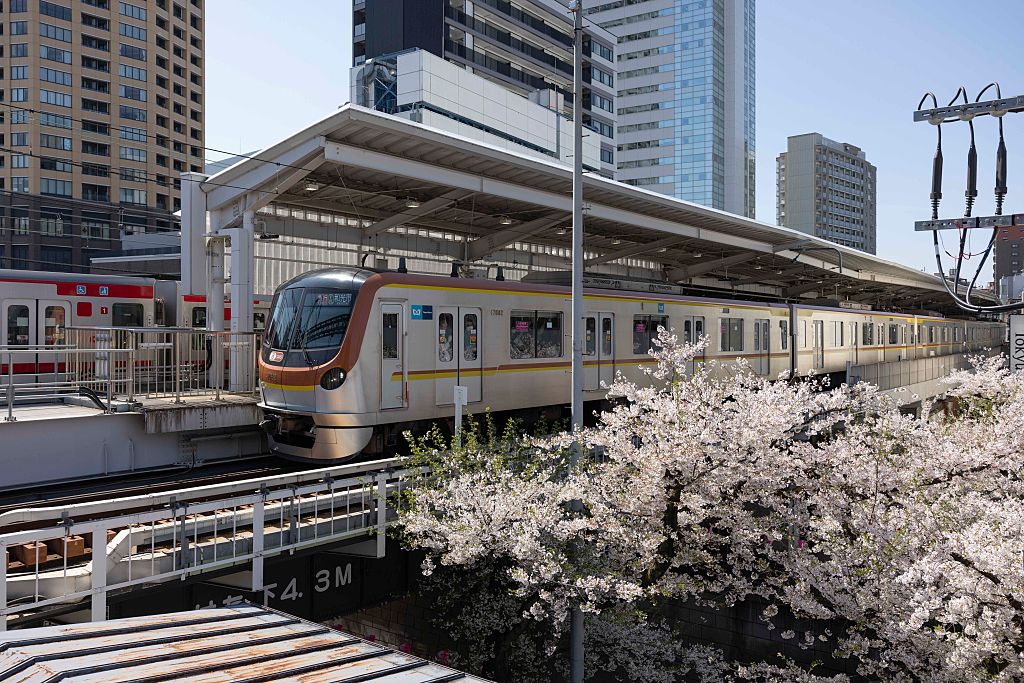
Most of these companies, by their nature, operate as a monopoly. This is a strategic benefit, but also a risk, as in most cases they're closely watched and regulated by government bodies. Tokyo Metro is a good example. The company owns and operates nine heavy-rail subway lines across central Tokyo, along with 180 stations, rail depots, tracks and associated infrastructure. It also owns the railcars, underground shopping centres and vending machines, as well as advertising assets. Around 10% of its revenue comes from these ancillary services.
If you want to get around Tokyo, you need to use its trains and walk past its concessions. Before it floated, the central government and Tokyo metropolitan government owned 53.4% and 46.6% of the shares, respectively. In the initial public offering (IPO), these government bodies each sold 50% of their stakes. Over the first half of the company's 2027 fiscal year, it recorded a 3.2% increase in operating revenue, driven by higher passenger numbers. Average daily journeys reached 7.04 million passengers in the fiscal year that ended on 31 March 2026 (up from 6.84 million the previous year). Although peak-hour congestion on the busiest line sections came in at just 139%, below the 190% recorded pre-pandemic, tourist trips helped make up the difference. While revenue ticked up, expenses rose faster, up 4.7%, due to labour issues. To offset this, the group is rolling out contactless QR code ticketing and removing barriers to speed up the flow of passengers.
As part of a multi-year plan to drive growth, Tokyo Metro is aiming to double profits from divisions other than transportation over ten years while expanding its international rail operations, maintenance and consulting work (it obtained operating rights for the Elizabeth Line in London in November 2024 as part of a partnership with Sumitomo Corp.) while pushing ahead with construction on extensions for the Yurakucho and Namboku lines.
Tokyo Metro has detailed plans for growth and current business objectives on its website – I would encourage any interested investors to take a look– including plans for dealing with earthquakes and floods and increasing shareholder returns. It reports a return on equity of 7.8%, above the cost of capital of 5%-6%, a dividend payout ratio goal of 40% or more and a “dividend on equity” ratio of 3.4%. Based on management's projections, a dividend of around ¥44 per share is equivalent to a 2.9% yield. Tokyo Metro continues to drive growth through higher passenger numbers and efficiency gains, but Japan's declining population is a potential long-term headache.
Indian Railways lead the world
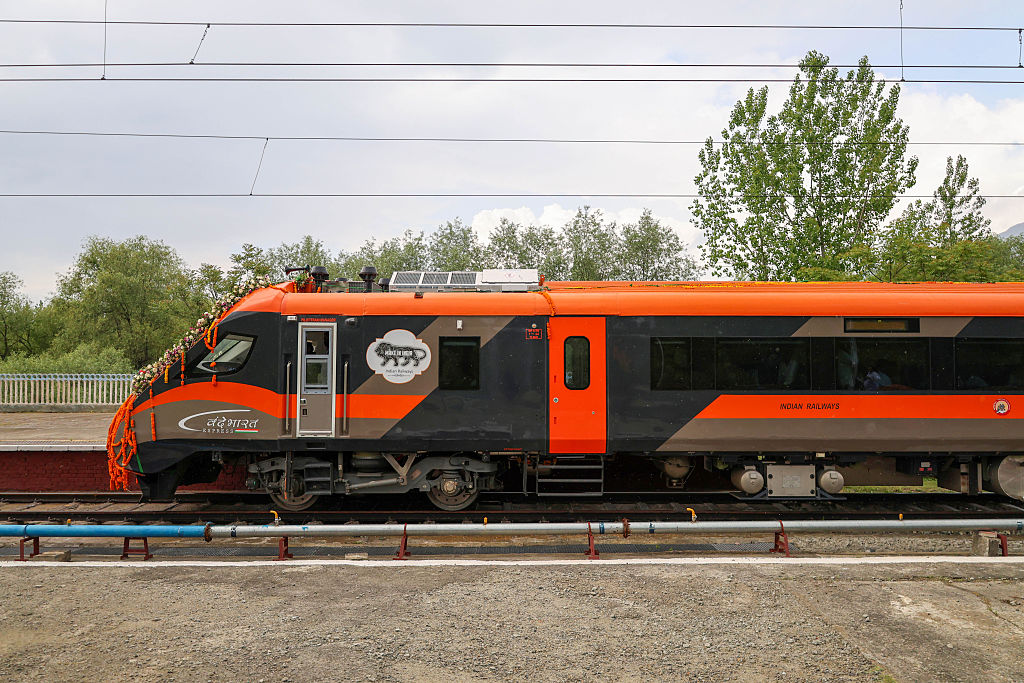
The situation looks very different in India. Alongside China, India is becoming the world's leading growth market in the rail industry. The country's size and population mean that rail is the only way to move people and cargo efficiently. Indian Railways as founded in 1853 and merged into one state-owned group in 1951. It carries more than 7.4 billion passengers annually (roughly 20+ million daily), moves 1.67 billion tonnes of freight per year and employs 1.3 million people. Over 99.7% of the track is electrified, compared with less than 40% in the UK.
The government has now laid out plans to spend as much as $600 billion by 2030 on upgrading and modernising the network. It's introducing high-speed trains, such as the Vande Bharat Express chair-car and sleeper trains, and India's first 350km/h high-speed rail corridor between Mumbai and Ahmedabad, using technology from the Japanese Shinkansen trains. Elsewhere, the country is building separate, freight-only rail lines to decongest passenger tracks and double the average speed of cargo trains.
Most companies in this area are either state-owned or publicly listed with the government of India as a majority shareholder. For example, is the primary financing arm that raises funds from capital markets to acquire and lease railway assets. The government owns 83% of this business, which reported revenue growth of 23.5% and net profit growth of 10.2% in the first half of this year. operates container logistics, rail-linked terminals and freight warehousing, with a 54% government stake. This company is set to benefit from the government's freight rail reforms and the country's economic growth. Since listing in 2000, it has delivered compound annual growth rates of 10.68% with respect to revenue and 8.72% in terms of net profit. It's now earning an Ebitda margin of 25.8%.
Six plays on the American rail market
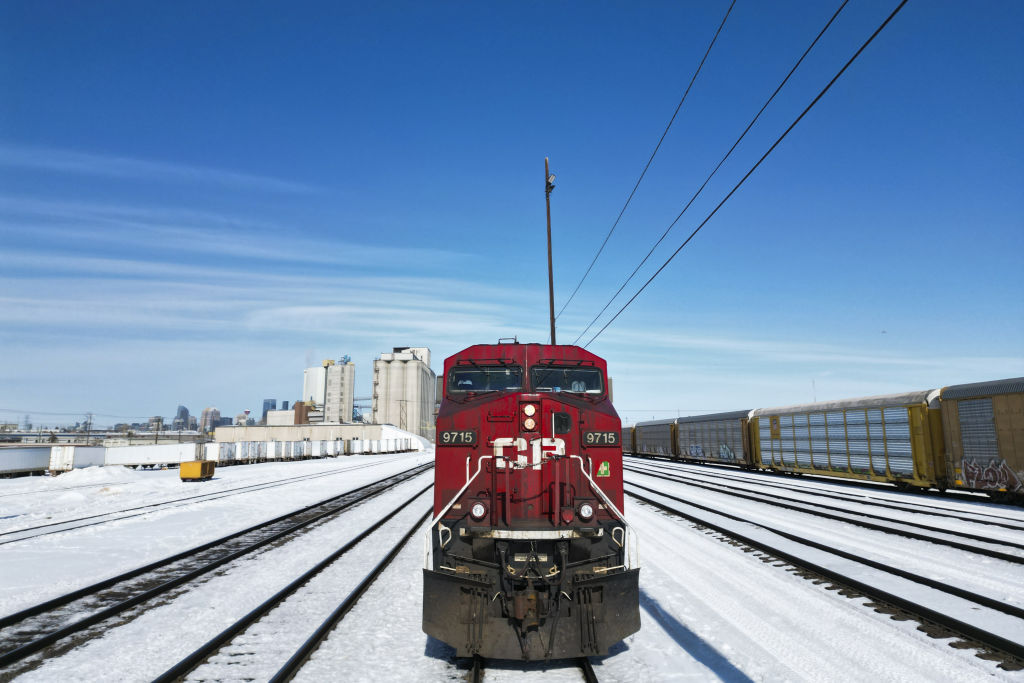
The North American rail market is the only other one in the world, apart from Japan, where investors can find a wide range of railroad firms that operate as consolidated businesses, with the firm owning the track, rolling stock and timetabling trains. The North American network is dominated by a few major Class I freight railroads, including , (NYSE: BRK.B) , , Canadian National Railway Company ( and Canadian Pacific Kansas City ( . BNSF was fully acquired by Berkshire Hathaway in 2010 and it's constantly vying for the top spot with Union Pacific. The latter is also trying to buy Norfolk Southern, but it's unclear whether it will clear regulatory hurdles.
Just as Japan's major railways operate in different segments of the country, these North American railroads have divided up the country into separate operating areas. All of the routes spread out from Chicago like a spider's web, roughly dividing the US in half, with Chicago to New Orleans as the dividing line. Union Pacific and BNSF's networks cover the western half of the United States, while Norfolk Southern and CSX crisscross the eastern seaboard.
Canadian National and Canadian Pacific Kansas City have a limited presence in the northern US, with most of their networks in Canada. They do, however, have a small presence in this Chicago-to-New Orleans corridor and Canadian Pacific's network extends all the way into Mexico. Virtually all traffic on these networks is freight and freight railroads account for roughly 40% of US long-distance freight volume, more than any other mode of transportation. They move oil, coal, corn, chemicals and many other product types across the world's largest economy day after day.
Until around 2022, the industry was stymied by a focus on so-called precision railroading. Pioneered by legendary railroad executive E. Hunter Harrison, precision railroading is designed to drive costs down as far as possible by closing unnecessary rail yards, running longer trains and cutting unnecessary journeys. The strategy was fabulously successful, with activist investors driving implementation across the sector. Over the past 15 years, for example, shares in Union Pacific, CSX and Canadian Pacific Kansas City have delivered between 14% and 15% per annum, thanks to this focus on returns. Following civil accidents, driven, according to regulators, by the 20%-30% decline in staff numbers due to precision railroading, railroads have reversed course since 2022. The good news is that this has coincided with a jump in volumes, offsetting some of the higher costs.
According to UBS analysts, Union Pacific and CSX have the most potential. Given their role as vital backbones of the US economy, these two railroads are among the most interesting ways to profit from US economic growth. They essentially have toeholds in every part of the economy. Take CSX: this year it is expected to see 6.6% volume growth in metals, as steel and aluminium production move back home due to Donald Trump's tariffs. Volume in US chemicals is expected to rise 5.6% owing to demand for them in Europe. And intermodal volumes – traffic moved via shipping container from major ports to major cities – will grow nearly 7%.
Although the market is divided on the Union Pacific-Norfolk Southern merger, if it goes ahead, the company will become the only integrated transcontinental railroad; analysts project earnings per share as high as $21.90 in 2030. A 21 times earnings multiple on this figure could yield a valuation of $460 per share. Even without the deal, analysts believe the company can achieve 11.5% annual earnings growth from 2025-2027, driven by productivity gains and volume growth of around 3.5% per year.
CSX, meanwhile, can benefit from its position as the leading railroad company across the eastern seaboard of the US. UBS has pencilled in volume growth of 4.5% to this year, 3% in 2027 and 2.3% in 2028. Higher prices, coupled with up to 100 efficiency initiatives, could help the company's Ebitda margin rise from around 48% today to nearly 51% by the end of the decade, according to UBS.
This article was first published in MoneyWeek's magazine. Enjoy exclusive early access to news, opinion and analysis from our team of financial experts with a MoneyWeek subscription.