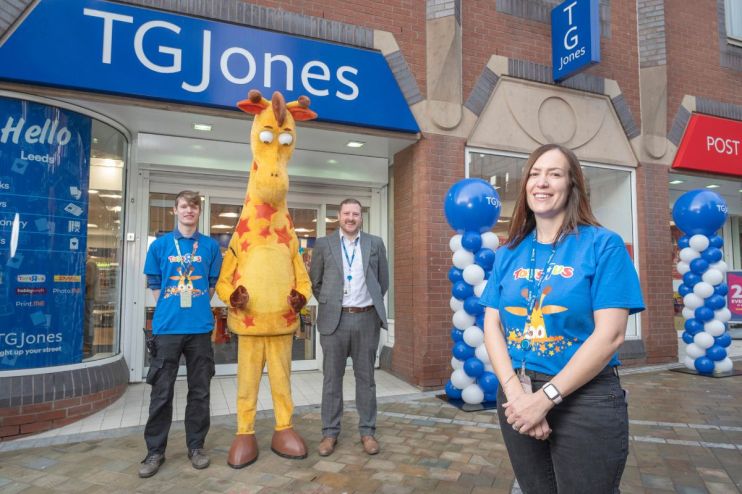
Private equity has swooped in on a number of big name British high street and retail companies in the past five years, including Poundland, TG Jones and Morrisons. But after a reputational battering, investors might think again in future, writes Felix Armstrong.
Just 18 months after ending WH Smith’s 233-year run on the British high street, London-based private equity firm Modella Capital wants out.
The heritage retailer, now rebranded TG Jones, has gone through a drastic restructuring which slimmed down its footprint by about 150 stores and caused backlash from landlords who faced having their rent cut and locals who bemoaned the loss of their Post Offices.
The high street business, which is now “smaller but viable,” is thought to be better off in the hands of an experienced retailer who can complete its turnaround, sources close to Modella said.
The impending exit of Modella, which recently oversaw the collapse of Claire’s Accessories and The Original Factory Shop, comes amid mounting pressure on the private equity owners of many of the UK’s best-known retailers.
Stay in the know
Three daily briefings with the key market moves and top business and political stories.
SUBSCRIBE HEREGordon Brothers, the US investment firm which bought Poundland just last year, has faced intense scrutiny over its sale of the discount retailer, during which it has refused solvent offers for the company in a row over a £30m loan.
Budget supermarket chains Morrisons and Asda are both struggling to gain a foothold in a market dominated by family-owned Lidl and Aldi on the lower end, and publicly-held Tesco and Sainsbury’s on the upper.
Morrisons has been creaking under a huge debt pile since it was bought by New York-based private equity firm CD&R in 2021. Its net debt rose from £7.1bn to £7.5bn in 2025. TDR Capital-owned Asda’s debt pile, while falling, still stands at more than £3bn.
As Gordon Brothers and Modella seek their respective exits from the British high street, and Asda and Morrisons struggle to keep their place on it, private equity firms are reckoning with the huge pressures facing the UK’s retail sector.
‘Challenging retail sector likely to deter private equity investors’
While many of these owners managed to pick up their assets for a bargain, spinning a worthwhile return from the British high street is proving difficult, City analysts and advisors told .
Nalin Patel, director of private capital research at Pitchbook, said the “challenging environment for retail is likely to deter” future private equity investors from looking for assets on the UK high street.
Rising business rate costs, falling consumer confidence and the shift in demand towards e-commerce mean other industries like tech, energy infrastructure and finance are far more attractive for private investors, he said.
To make a worthwhile return, private equity firms need “businesses that are consistently increasing their revenue and ultimately increasing their margins over a period of time,” Patel said.
Jonny Bethell, a private equity advisor at Winston Taylor, said the UK’s retail sector only attracts a small number of buyers with specialist interest because it has been “a macro downward market for some time. […] These aren’t slam-dunk investments”.
The pressure on retailers like TG Jones and Poundland is likely to deter this bold few, and has “probably proved to lots of people that they’re doing the right thing [by] not investing in these businesses at the moment,” he said.
Bethell said private equity firms are unfairly criticised for failing to save businesses which were already on the downturn.
“There’s times where, not only is criticism and negative publicity not a good thing for the private equity house, it can also be unfair in that those investors have taken a chance and invested capital to try and turn these businesses around,” he added.
‘Select committees are no one’s idea of fun’
The reputational risks of investing in British high streets were never clearer than on Wednesday last week, when Gordon Brothers executive Mark Newton-Jones was hauled in front of Parliament’s business select committee.
Liam Byrne, the committee’s chair, accused the investment firm of “jeopardising thousands of jobs on Britain’s high streets,” adding that he had seen “concerning signs [Poundland has] been estranged of access to its own funds”.
Byrne is just one of the many Westminster figures who have piled pressure onto Gordon Brothers over its sale of Poundland. Andy Burnham has called on Gordon Brothers to explain why it has not found a deal for the retailer, while Reform UK treasury spokesperson Robert Jenrick has dubbed the firm a “corporate raider”.
“I don’t think anyone’s idea of fun is going up before Liam Byrne and having rockets thrown at you,” an executive at one Square Mile advisory firm said.
This political pressure comes on top of the rising costs and slumping consumer confidence which are “causing chaos and carnage for retailers up and down the company,” they added.
“But there’s a role for these guys” in picking up struggling high street businesses, the person said, “because if they’re not doing it, then I don’t really know who will”.
Another City advisor said the British public’s skepticism of overseas private equity owners has begun to deter them from buying into the UK’s high streets.
“There’s always been a particular strain to British politics, and it is common across political parties, but particularly in the Labour Party, of anti-consumerism, anti-capitalism, and anti-Americanism,” the person said.
“You’re now also seeing this from a high street retail ownership perspective, where you’re looking at private equity owners, particularly when they’re US owners. That is becoming a common theme that worries me going forward.”