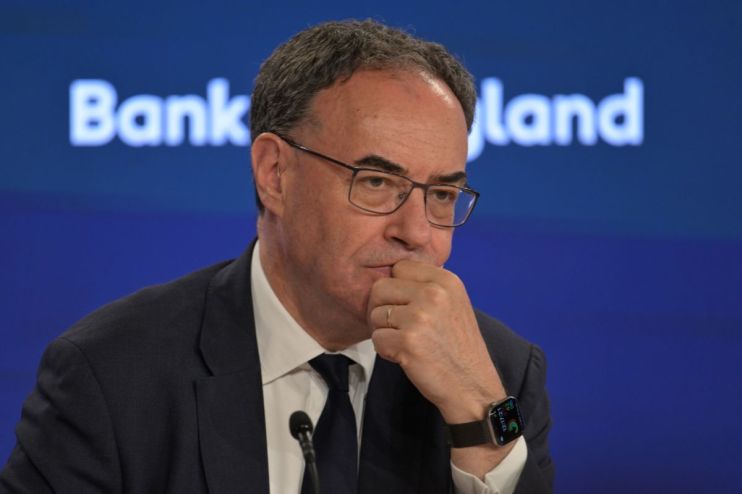
Bank of England governor Andrew Bailey has said a continuation of the Iran war and a “firming in the labour market” are likely to lead to further interest rate hikes.
In a speech at the Institute of Economic Development Conference in London, Bailey explained that nine months of conflict in the Middle East, which has pushed up energy prices worldwide, prompted the Bank of England to hike interest rates to four per cent in early November.
He said that uncertainty around the war and how costs would feed through to other prices would determine the next monetary policy decision in mid-December.
But he also said he wanted to “emphasise” the point that monetary policy may have to be tightened further as President Trump and Israel’s war with Iran and its proxies drag on.
“The longer the conflict in the Middle East persists and elevates energy prices, the more likely persistent inflationary effects will take hold and the higher the level of interest rates will need to be,” Bailey said.
Stay in the know
Three daily briefings with the key market moves and top business and political stories.
SUBSCRIBE HEREThe Bank governor then explained that spending levels in the UK economy had been higher than predicted, even if confidence levels have fallen.
He added that despite suggestions of “spare capacity” across employment, “a firming in the labour market will have supported household incomes and spending”.
The Bank’s Monetary Policy Committee, which is mandated to keep prices stable at two per cent growth in the medium term, closely monitors evidence of price pressures building up in the UK economy. In Wednesday’s data, while inflation edged up to 3.6 per cent in the year to October, price growth stripping out volatile items remained at 2.8 per cent.
Interest rate hikes hinge on data
Trends in the jobs market impact policy decisions as high levels of unemployment, together with low job vacancy levels, can reduce workers’ wage bargaining powers, thereby limiting a wage-price spiral effect in the economy.
Earlier in the week, new data showed that the rate of unemployment dropped to 4.7 per cent while vacancy levels also fell. Wage growth also did not tick up, rising by just 3.2 per cent in the private sector.
Bailey’s comments on the stabilisation in the jobs market may support the view that the Bank is more concerned about inflation spiking higher than hoped.
His speech affirmed that “national average can only tell us so much”, adding that the effects of the Iran war have been “uneven” across the economy. AI spending could improve productivity levels in the long term although the impact has been “so far relatively small”, Bailey said.