Thank you for joining us

Thank you for following our live coverage of the Autumn Budget. If you have sent a question that has not been answered yet, then keep an eye out for your newsletters where we will answer some of your questions from the Budget.
And if you’re interested in knowing what Healey’s plans mean for your money, then we’re also taking a deep dive into the Budget at next week’s Wealth Summit.
I will be recording a live podcast on the day with a panel of experts – Lisa Conway-Hughes, a chartered financial adviser, independent economist Julian Jessop and Emma Moriarty of Capital Gearing Trust. We will be discussing what the Budget means for your money and action you should take.
Tickets are still available, and you can get 10% off yours by using code MWKF2710.
Thank you for joining us. Have a good evening.
Some sensible decisions in Healey’s Budget – but bad news for landlords

Chancellor John Healey made some sensible announcements in today’s Budget – such as reversing the decision to cut the cash ISA allowance to £12,000 per year for under 65s from April 2027. He also addressed the Lifetime ISA “unauthorised” withdrawal charge, which is a positive for first-time buyers who have been saving to buy a property but live in more expensive areas.
Healey’s £100 payment for up to 20 million households in England this winter is also welcome, although you’ll need to live in council tax bands A-D to get it.
There was bad news for landlords though. Former chancellor Rachel Reeves had already announced that separate, higher, tax rates for property income in England, Wales and Northern Ireland would be created from April 2027. Healey has announced these will be hiked from the 2027/28 tax year, when the property basic rate will be 24%, the property higher rate will be 44%, and the property additional rate will be 49%.

Have you got a question about the Budget which you’d like a financial expert to answer? We’d like to hear from you. Get in touch by emailing .
"Will working people on minimum wage be taxed more? I am already struggling.”
Rachael Griffin, personal tax expert at Quilter, said: “The short answer is that a rise in the minimum wage should still leave you better off, but you may find more of your earnings going to tax. That is because the amount you can earn before paying income tax has not been rising alongside wages.
“As your pay increases, a greater proportion can therefore fall above the tax-free personal allowance. This is known as ‘fiscal drag’. It means some of the benefit of a wage increase is effectively clawed back through higher tax, even though income tax rates themselves have not gone up.
“What really matters is how much extra money ends up in your pocket each month. A higher minimum wage should increase take-home pay, but frozen tax thresholds mean the increase will not translate pound-for-pound into disposable income.”
Who will get the £100 Household Energy Payment?
Up to 20 million households will get £100 this winter via the new £2.6 billion Household Energy Payment scheme.
Households in England in council tax bands A-D will be eligible. It’ll be paid directly into bank accounts from January 2027.
Devolved governments will receive their share of this funding via the Barnett formula.
MoneyWeek readers have been sending in their Budget questions. Have you got something you’d like to ask a financial expert? Email .
"Why will pensioners on the new state pension, if it is their only income, not pay tax? Whilst I, on the old state pension, will? I live alone in a flat and pay ground rent and maintenance. I struggle to pay all this and live. My state pension is my only income."
Clare Moffatt, pensions and tax expert at retirement firm Royal London, said: "The pension tax allowance, announced in today's Budget, will apply from April 2027 and it means that anyone who is state pension age and has total income that's no more than the full new state pension, will not pay tax.
“Their income could include state pension income (new or basic state pension), income from a private pension, salary, savings, property or dividend income or a combination of all of these.
“If you only receive the basic state pension then there won't be any income tax to pay as that's less than the full new state pension. If you have basic state pension and any additional state pension, then there will be no income tax to pay if that is, in total, below the amount of the new state pension which will be £13,036.40.
“If it's higher, then there may be some tax to pay. That's because the pension tax allowance gradually reduces on total income between £13,037 and £13,319. Once you have income over £13,319 then basic rate tax applies for the amount over this level.”
‘Landlords aren’t a bottomless pit’
From April 2027, the income tax rate applied to property income will rise by a further two percentage points.
In the 2025 Autumn Budget, chancellor Rachel Reeves said separate tax rates for property income would be created from April 2027, which would have increased the tax paid on property income by two percentage points. This means it will now rise by four percentage points.
Basic rate taxpayers will now pay 24% on property income, up from 20%, while the higher rate will rise from 40% to 44%. The additional rate for property income will rise from 45% to 49%.
Elliot Castle, chief executive officer of Castle Property Group, said the latest change was bad news for a sector that’s been targeted “again and again”.
“In two years, landlords have had a higher stamp duty surcharge on purchases, the end of Section 21, a raft of new rules, regulations and costs under the Renters’ Rights Act and now more tax on the income they earn from their properties,” he said.
“Landlords aren’t a bottomless pit that the government can keep raiding. This tax lands on ordinary, hard-working people who might have inherited a property or bought a second one to top-up their income or fund their retirement.”
What does the Budget mean for investors?

The key indicator for me is the fact that, at the time of writing, gilt yields are lower after the Budget speech than they were before it. Bond traders would have been watching closely and would have punished any sign that government spending was getting out of hand. Instead, they seem to have been reasonably reassured that Healey’s plans to reduce the deficit over the coming years are credible.
It’s a mixed bag for investors. No rise in tax rates on dividend income is a relief, and the ‘Starter ISA’ is an intriguing prospect – on the face of it (though we’re waiting for the details) a much more positive alternative to slashing the cash ISA allowance to get people investing. On the other hand, though, the increases to tax rates on income from property and savings will be unwelcome for many.
OBR: Interest rates expected to rise
Interest rates are expected to rise to around 4.25% by mid-2027, according to the OBR’s latest economic forecast.
The OBR predicts the Bank of England’s base rate will rise by 0.5 percentage points in less than a year, to reach 4.25%, up from the current level of 3.75%.
Rates are expected to edge even higher by the end of the forecast period, reaching 4.5% in 2031.
Real household disposable incomes to fall, OBR says
With higher energy prices hitting households, disposable income in real terms (after inflation) is set to fall, according to the OBR’s forecast.
The watchdog predicts per person household disposable income will fall slightly in 2026 and 2027, before starting to grow again until 2032.
The OBR also predicts per person real household disposable income in 2030-31 will be 0.75% below its March forecast and end the forecast period just 2% above its pre-pandemic level.
How new pension tax allowance will work
Budget documents have now been published, revealing more details about how the new pension tax allowance will work.
From April 2027, if pensioners’ total income is more than the £12,570 personal allowance but less than the value of the full new state pension (£13,037), they will not pay income tax.
If their income is between £13,037 and £13,319, they will receive some allowance and pay some income tax, but less than they would have before the change.
Total income classes as income received from the state pension, private pensions, earnings from work, savings and property or dividend income, or a combination of some or all of these.
Jamie Jenkins, director of policy at retirement firm Royal London, said: “Excluding people who rely on pension income up to the value of the state pension from being pulled into paying income tax is a welcome protection measure.
“However, it doesn’t make the wider issue of frozen tax thresholds disappear. Many pensioners receive income from workplace or private pensions alongside their state pension, and as pension incomes rise while tax thresholds remain frozen, more people could find themselves paying tax or paying tax on a greater proportion of their income.”
The UK state pension is set to rise by 3.9% in April 2027, in line with the earnings element of the triple lock.
It would mean the full new state pension increases from £241.30 per week (around £12,547 per year) to £250.70 per week (around £13,036 per year) from April.
The full basic state pension, paid to older pensioners on the previous system, will rise from £184.90 a week (around £9,614 per year) to £192.10 (around £9,989 per year).
Badenoch: This Budget does not come close to meeting the mood
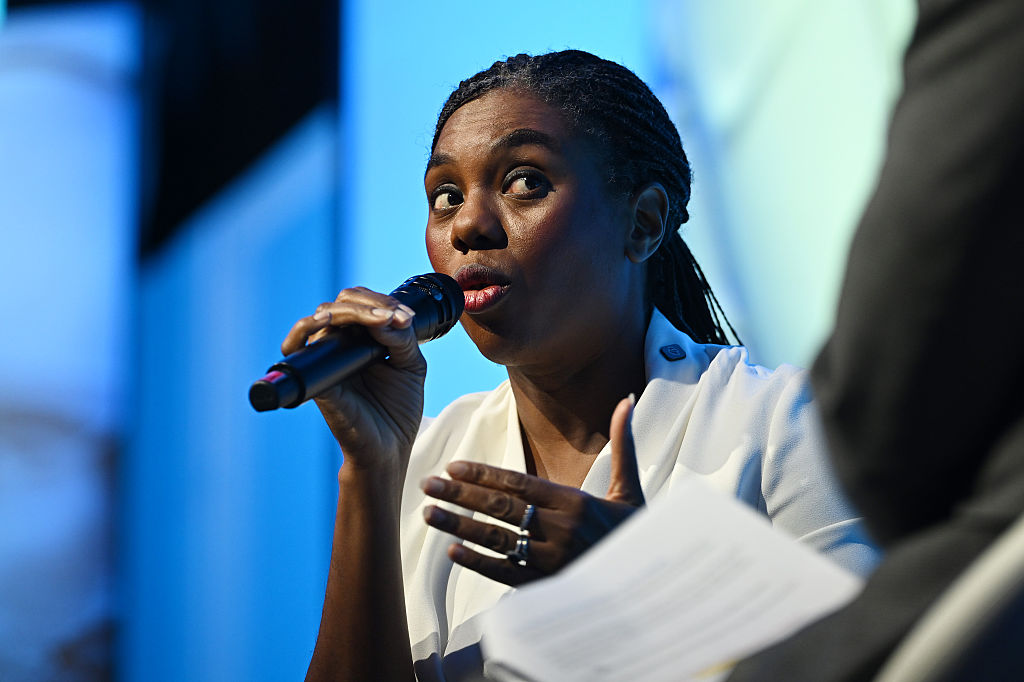
Conservative Party leader Kemi Badenoch said despite the government facing a surging debt bill, this Budget “does not come close to meeting the mood”.
“He [Healey] is giving this Budget at a time of great economic danger,” she said.
“We are spending more on debt interest than on the army and schools combined. The rate of interest we pay on our debts is higher than Greece, Latvia, Slovakia, even the Socialist Republic of Vietnam.
“Next year, under Labour, the tax burden will be the highest in our country's history, and our benefits bill is going up by tens of billions of pounds because this government has put welfare first. We are overspent, overborrowed, overtaxed, and drowning in an out-of-control wealth-based system.”
“Addressing unfair Lifetime ISA penalty is welcome news”
Dealing with the controversial Lifetime ISA penalty is overdue, and it’s definitely welcome news for people who have been saving for their first home for years.
I think the Lifetime ISA was a great product for prospective first-time buyers – you can put in up to £4,000 each tax year and get a 25% boost from the government, up to £1,000 – but the £450,000 property price cap hasn’t risen since it was introduced in April 2017, despite house prices rising. That’s particularly problematic for people living in areas where house prices are typically higher, such as London and the south east.
The frozen cap has meant people who have been diligently saving via a Lifetime ISA for years face having to buy from a narrower choice of properties below £450,000, waiting until they are 60, or paying a 25% “unauthorised withdrawal charge” if they take the money out. The latter means you could also be charged on some of the money you put in.
For instance, if you had put £8,000 into your Lifetime ISA over the years, you’d have got a £2,000 government boost, giving you £10,000 (assuming no growth). If you took the entire pot out via an “unauthorised” withdrawal, you’d pay a 25% charge on the £10,000, costing £2,500. This would leave you with £7,500.
From 29 October 2026, this “unauthorised” withdrawal charge will drop to 20%. This recovers the government bonus (£2,000 in the example above), but means you don’t lose the money you contributed.
A new First Time Buyer ISA will also be introduced from April 2029, replacing the Lifetime ISA for new savers. It sounds like it’ll be similar to the old Help to Buyer ISA, in that the 25% government bonus will be paid on withdrawal, but savers can use it to buy a first home worth up to £450,000. The maximum value of the bonus will be limited to £20,000.
While raising the £450,000 property price cap would have been better news for first-time buyers living in more expensive areas, reducing the Lifetime ISA unauthorised withdrawal charge to 20% is definitely good news. The Conservative government temporarily did this during the Covid pandemic, and I’m glad Healey is now making it permanent.
OBR: Inflation forecast to average 3.5% in 2027, and only fall to 2% in 2028
Inflation is now expected to average 3.5% in 2027, the Office for Budget Responsibility’s (OBR) economic and fiscal outlook shows.
The UK’s official fiscal watchdog’s latest forecasts show price growth will remain far above the Bank of England’s 2% target next year, with a return to 2% only expected in 2028.
Higher energy prices caused by the Iran war are driving inflation, according to the OBR’s report.
What did you think of Healey’s Budget?

We want to know what you think about the Budget. Tell us what you think by voting in the poll below.
Gilt yields lower at end of Healey’s speech
There has been further movement in 10-year gilt yields as Healey’s speech gave way to Kemi Badenoch’s.
By the end of the chancellor’s speech, yields had fallen back to around 5.31%. However, they have since crept back up to 5.33% – around 0.36% below yesterday’s close.

“It's good that John Healey has abandoned Rachel Reeves's planned changes to the ISA rules, which would have weakened one of the best tax-free savings and investment wrappers offered by any country in the world. It is unfortunate that he has not gone further and ditched or reformed more of her misguided measures, such as the new inheritance tax liabilities on agricultural and business property and the reduction in tax relief for venture capital trusts.
“It also remains the case that the ISA regime would benefit from further simplification to create a single type of account that can hold any permitted investments and the government should have focused on this rather than trying to use the ISA name to tinker with the property market through yet another economically illiterate Help-to-Prop-Up-Prices initiative.
“However, I think there is a risk that he keeps the new tax charge on interest in investment accounts, so I will wait to see the outcome.”
Banks get Budget boost
While the chancellor has announced an increase in taxes on banking sector profits, many had feared that the sector would be hit harder than the 3% addition to the banks surcharge that will come into effect in January and last for 15 months.
Banking stocks are now experiencing a relief rally. Shares in NatWest (LON:NWG) are up by 4.2%, while Lloyds (LON:LLOY) shares are 4.1% higher than yesterday’s close.
Healey: Budget delivered “breathing space” and raised revenue “from those who can afford to pay”
The chancellor has finished delivering his first Budget, and Labour’s third so far since the 2024 general election. Healey said the Budget will deliver “breathing space now, while taking the long-term action to get costs down”.
He said the tax raised is coming from “those who can afford to pay”, emphasising that he did not raise taxes on wages or dividends.
“And just as the British people helped support our banks 20 years ago. It is our banks that will help give families breathing space today. And for our high streets, it's gaming machines and vape shops that will help provide funding for our pubs, our shops, and our cafes to thrive.”
He added: “The decision I've taken today will help steer Britain through. And when the storms pass, what matters is where Britain is heading. A Britain reindustrialised, a Britain with power returned to communities, threats deterred, global opportunities seized.
“In our first 100 days, this Labour government has set a course for fresh hope, good growth, and support for those who need it. We know who we are. We know who we are. We know where we're going.”
Healey to reform Lifetime ISA penalty
The chancellor has addressed the controversial 25% Lifetime ISA penalty.
“I'm dealing with the ISA penalty, so that if the home you want costs more than the limit, you will get back at least what you put in,” he said.
He also said the previously announced First Time Buyer ISA, will replace the Lifetime ISA.
Healey says the Burnham government’s Your First Home scheme will be introduced from next spring. This equity loan scheme will be funded with £4.7 billion of government-backed lending.
£430 million committed to end rough sleeping
A further £430 million will be committed to help end rough sleeping, with the homeless given a “route off the streets” every winter until at least 2030.
“We've already promised everyone sleeping rough a route off the streets this winter, and today I confirm a further 430 million pounds to keep that offer open for the rest of this Parliament, not just this winter, but every winter.
Chancellor commits to fully funding the Defence Investment Plan
Healey had served as defence secretary under Keir Starmer, but resigned the position in objection to the Defence Investment Plan (DIP) which he said “falls well short of what is required for defence and the country at this dangerous time”.
Today, the chancellor has confirmed that he will fully fund the plan.
“In this new era of threat, demands on UK defence are rising,” he said. “Keeping our people safe by equipping our armed forces is the first priority of any government."
“This year, our defence budget is £14 billion higher than it was in the Conservatives last year,” said Healey. “At the spending review next year, I confirm that I will set out details of how we will meet our NATO commitment to spend 3.5% of GDP on defence by 2035, with a target date for 3% in 2030.
“Today, I'm getting work underway to get there in a fiscally sustainable way. That will include looking hard at public spending, as I have done today, to fund the Defence Investment Plan.”
Healey also announced the deployment of a new defence finance task force, to work closely with the private sector on defence funding, as well as collaboration with Finland, Poland and the Netherlands to boost defence investment and joint procurement.
Healey: Adjusting triple lock “will save £50 billion by 2050”
The chancellor says adjusting the triple lock, as Labour plans to do in 2030 if it wins the next general election, will save £15 billion per year by the end of the 2030s. By 2050, he says it will save £50 billion.
Government to address welfare bill later this year
The government will bring down the welfare bill in “a Labour way”, Healey said.
Healey said the government will set out its response to the Milburn and Timms reports before the end of the year with a white paper. Legislation will follow next year.
“I refuse to see disabled people suffer the indignities of a system that has been found not fit for purpose, and I refuse to allow the burden of paying for this failing system to fall on taxpayers for decades to come,” he said.
Chancellor confirms mayors will retain portion of income tax from 2028
As announced earlier this year, regional mayors will start to receive portions of tax revenue raised in their local areas from 2028 in “the most radical act of devolution in a generation,” says Healey.
Mayors will receive 100% of business rates by the end of the decade, starting with 20% from next 2027.
From 2028, a share of income tax receipts will also go to mayors. Mayors will also be given the power to introduce a tourist tax.
Healey said: “Taken together, these are long-term funding streams. They can be used to back investment into big local infrastructure, so that more of the money that is raised locally can be invested and spent locally.”
Trading allowance to be tripled
The chancellor has confirmed the trading allowance, available to those making trading or miscellaneous income, will be tripled.
The allowance is currently £1,000 per tax year but it will rise to £3,000.
Healey also said the government will launch a new ‘young entrepreneurs allowance’, which will cover a year of living costs for young business founders.
A new starter ISA for first time investors
Now, this makes sense. Healey has confirmed that the cut to cash ISAs to £12,000 will no longer happen. This is good news as it gives savers choice without feeling penalised.
I much prefer the idea of a starter ISA which feels far more encouraging. It will be challenging, still, to encourage cash holders to switch. The government will have to work closely with the industry to educate those who are unaware of potential benefits to grow and preserve their wealth.
Property and savings income tax to rise by a further two percentage points
The chancellor will increase tax on income coming from property and savings, upping rates by an additional two percentage points.
Tax rates on income from property and savings were already set to increase from April 2027, but Healey has now said these tax hikes will be even steeper.
He said: “I'm increasing the rates on tax on income from property and savings by a further two percentage points from April 2027, with no change to tax on income from dividends and no change on tax to income from employment.”
Healey claims “88% of people” will pay no more tax on their savings income.
There has been no specific confirmation of what these rates will be, but assuming there is a blanket two percentage point rise, it would bring tax rates on property and savings income to 24% for basic rate taxpayers, 44% for higher rate taxpayers, and 49% for additional rate payers.
Healey announces ‘Starter ISA’
As well as confirming that proposed changes to the annual cash ISA limit won’t go ahead, Healey also announced that he will consult with the UK’s investment sector to create “a new starter ISA to reward first-time investors”.
Experienced investors will also be relieved by the chancellor’s confirmation that there will be no further increases to income from dividends.
Banks surcharge
Healey has said the surcharge charged to banks will increase by 3%.
He said: “World-leading banks make a huge contribution to this country in the tax they pay, in the jobs, industry, and investment they support.
“As chancellor, I want to say directly to our banks: I celebrate and I am grateful for the role that you play.
“And amid the global economic storms, I am looking to our banks to help fund breathing space.”
He said the 3% increase will be “time limited” to fund energy bill support.
Healey: Tax rises are “balanced”
To pay for policies announced in the Budget, the chancellor has announced that he will need to increase some taxes.
“Providing support for British families and businesses has meant raising some tax to meet my commitment to fiscal discipline.
“I've done this in a balanced way, protecting the incentives for business investment and the incentives and income from work.”
Support for business announced
Healey has said the threshold for small business rate relief for retail, hospitality and leisure firms will be increased from £12,000 to £18,000.
He said this means around half of shops, restaurants and gyms will pay no business rates at all.
Healey also said the government will raise taxes on gambling by increasing machine games duty from 20% to 25% for higher stakes machines.
Healey reverses cash ISA changes
The plan to introduce a £12,000 per year limit on cash ISA contributions for under 65s next year has been scrapped. Everyone will be able to put a maximum of £20,000 into ISAs in the next tax year.
Healey also said he will work with the sector to create a new starter ISA to reward first-time investors.
Former chancellor Rachel Reeves announced changes to cash ISA rules in the 2025 Autumn Budget, which were due to come into force in April 2027.
Reeves had hoped the measure would get more people to invest, but critics said it would make the ISA regime more complicated and it’d be better to improve financial education.
Will Stevens, Partner at Killik & Co, said today’s decision to retain the current overall ISA allowance was “sensible”, as the policy risked penalising sensible saving behaviour rather than promoting investing.
He said: “Consumers use cash ISAs for a variety of reasons, including emergency reserves, short-term goals and managing uncertainty, and it is important that they retain the freedom to save in a way that suits their circumstances.
“If the Government wants to increase participation in stocks and shares investing, improving financial education and helping people better understand the long-term benefits of investing is likely to be a more effective and sustainable approach than restricting existing tax allowances.”
Minimum wage and living wage increased by 3.9%
The national minimum wage and national living wage will increase by 3.9% this year, the chancellor has announced.
The national minimum wage applies to workers aged 18 to 21, and the national living wage applies to workers aged 21 and over.
The 3.9% will bring the national living wage to £13.20 an hour, or the equivalent of around £27,500 a year for those who work 40 hours a week.
Fuel duty freeze extended until July
The 5p cut to fuel duty has been extended until July.
The cut was due to expire earlier this year, but then-chancellor Rachel Reeves extended the cut until the end of 2026.
However, as the Iran war has continued to push fuel prices up, the chancellor has decided to extend this freeze until July 2026.
He said: “Earlier this year, the government extended the 5p cut to fuel duty, and slash red diesel to its lowest rate in over 20 years.
“With the war in the Middle East still driving high fuel prices, I'm extending these tax cuts for motorists through the winter and spring to July, supporting households, hauliers, and farmers.”
Healey added that tax-free mileage rates for miles over 10,000 will be increased from 25p per mile to 35p per mile.
£100 energy payment for millions of households this winter
The chancellor has said 20 million households in council tax bands A to D will receive a £100 payment for energy bills this winter.
He said the payment will be made directly into eligible people’s bank accounts.
Government will introduce cost control framework
Healey has said the government will introduce a new “cost control framework” to drive down energy bills for households.
He also pledged to scrap the gas shippers obligation and levy to fund hydrogen projects.
New pension tax allowance for pensioners
Healey announced a new pension tax allowance for pensioners. It means people who solely rely on the UK state pension won’t pay income tax on it.
“For pensioners, I'm delivering the new pension tax allowance so that pensioners with income of up to the value of the full new state pension will not pay income tax in this parliament,” he said.
Fiscal headroom lowered to £15 billion
The chancellor has cut the UK’s fiscal headroom, the amount of unplanned spending it can make before it breaks its fiscal rules, to £15 billion in 2030.
Fiscal headroom will then rise to £22 billion in 2030/31, the chancellor said.
In March, the UK’s fiscal headroom was £23.6 billion, but this buffer has been eroded by the costs of responding to the Iran war.
Healey said: "That is what a buffer is for. Use it when you need it, rebuild it when you can. And so, despite the global challenges, this budget puts us on track to eliminate the current budget deficit and get Britain's finances into the black within three years.”
OBR upgrades GDP growth forecasts
The Office for Budget Responsibility (OBR) has upgraded the UK’s growth forecasts following today’s Budget.
The chancellor said the UK’s official fiscal watchdog now expects the British economy to grow by 1.2% in 2026, 1% in 2027, 1.6% in 2028, 1.8% in 2029, 1.7% in 2030, and 1.6% in 2031.
“Yes, there are real challenges ahead, but Britain has beaten the forecasts this year, and with the action I am taking today, I believe Britain can beat the forecasts again,” Healey said.
Chancellor abolishes standing charges on gas bills
Healey has confirmed the government will scrap standing charges on household gas bills. He said similar reforms for electricity bills will follow.
Gilt yields nudge upwards as Healey outlines fiscal headroom
The bond market responded positively to the start of Healey’s speech, with UK 10-year gilt yields falling from around 5.36% at 12pm to 5.31% as the chancellor started speaking.
However, they jumped back up to around 5.34% from 12.40pm, as Healey discussed the fiscal headroom forecasts.
Evidently bond traders weren’t as confident as Healey in the plan to bring down the UK’s fiscal deficit.
Healey: This Budget does not raise taxes on working people
The chancellor has claimed his Budget will not include tax rises for “working people”.
He said: “My choices in this Budget mean I've kept the Labour manifesto promise not to raise tax on working people, and I've rejected road-based tax rises or slashing public services, recognising that families and businesses need this greening space.”
UK to spend £14 billion on debt interest this year
The chancellor has said the UK will spend £14 billion on debt interest this year, according to the latest forecasts from the Office for Budget Responsibility (OBR).
Healey said: “Driven by the conflict in the Middle East, government borrowing costs across the G7 are reaching highs not seen for decades. And in today's forecast, the OBR predicts that we will spend £14 billion more on debt interest this year.
“Those are the storms we face. We cannot wish them away. We must choose the course we steer through. And fiscal discipline is my first commitment as chancellor.”
Healey: We face global economic storms
Healey says the UK economy is facing an uncertain economic backdrop due to conflict in the Middle East and Russia’s invasion of Ukraine.
He says: “Analysts like to speak of economic headwinds, but what we face today are global economic storms, with trade tensions acting as a drag on global growth, and Putin's illegal invasion of Ukraine, approaching now the end of its fifth year.
“The OBR sets out that the war in the Middle East is a key driver, affecting their forecasts today, and this government continues to work with our allies to end the conflict and restore shipping through the Strait of Hormuz.”
He went on to say: “We did not want this war, and we rejected calls from the leader of the opposition to jump two-footed into it into a war that has driven up costs.”
Healey: This is a Budget for working people
The chancellor has begun delivering his first Budget, promising it will deliver for working people, provide breathing space, and stimulate growth in every postcode.
He said: “This is a Budget for the working people of Britain, for British businesses, big and small, delivered at a time when global uncertainties and pressures are swirling worldwide and hitting people here at home.
“A Budget built on fiscal discipline, which matches immediate action today with clear direction for the future. First, by giving Britain some breathing space on the cost of living and the cost of business. Second, by backing the enterprise of British business to unleash innovation and growth in every postcode. And third, by tackling the big challenges on energy, on national security, on public service procurement and transformation, and on housing.
“In this Budget, I will set out the new approach this administration is taking, led by the vision of our new prime minister, demonstrated in our first 100 days carried through today's budget, the 10-year plan for Britain, and the spending review next year.”
Cash ISA U-turn – is it the right decision?
Going back on Rachel Reeves’ plan to slash the cash ISA limit to just £12,000 (down from the overall £20,000 allowance) in the 2027/28 tax year was possibly an easy move for Healey (he is expected to confirm this shortly). It shows he is listening to disgruntled savers who prefer to stick their money into cash accounts.
Historical figures from the Resolution Foundation show that only 7% (1.6 million) of all ISA holders actually maxed out their allowance in 2020/21; it is primarily the high earners who tend to make the full use of the allowance.
When Reeves announced the changes, this figure shot up by 2.5 million, with a higher percentage going to cash. In other words, it has not triggered the investing culture anticipated.
But has Healey made the right move to make a U-turn? He still has a job to stimulate the UK economy.
If the cash ISA limit is restored for under 65s, Healey must not overlook the fact that there is a pressing need to convert cash hoarders into investors. And if he wants these investors to back British companies, then he must do everything he can to help them thrive.
Chancellor due to speak shortly
The prime minister and chancellor have arrived at the House of Commons and the chancellor is due to start his address in a matter of minutes.
Stay with us as we bring you all the major announcements as they are made, and explain what they mean for you.
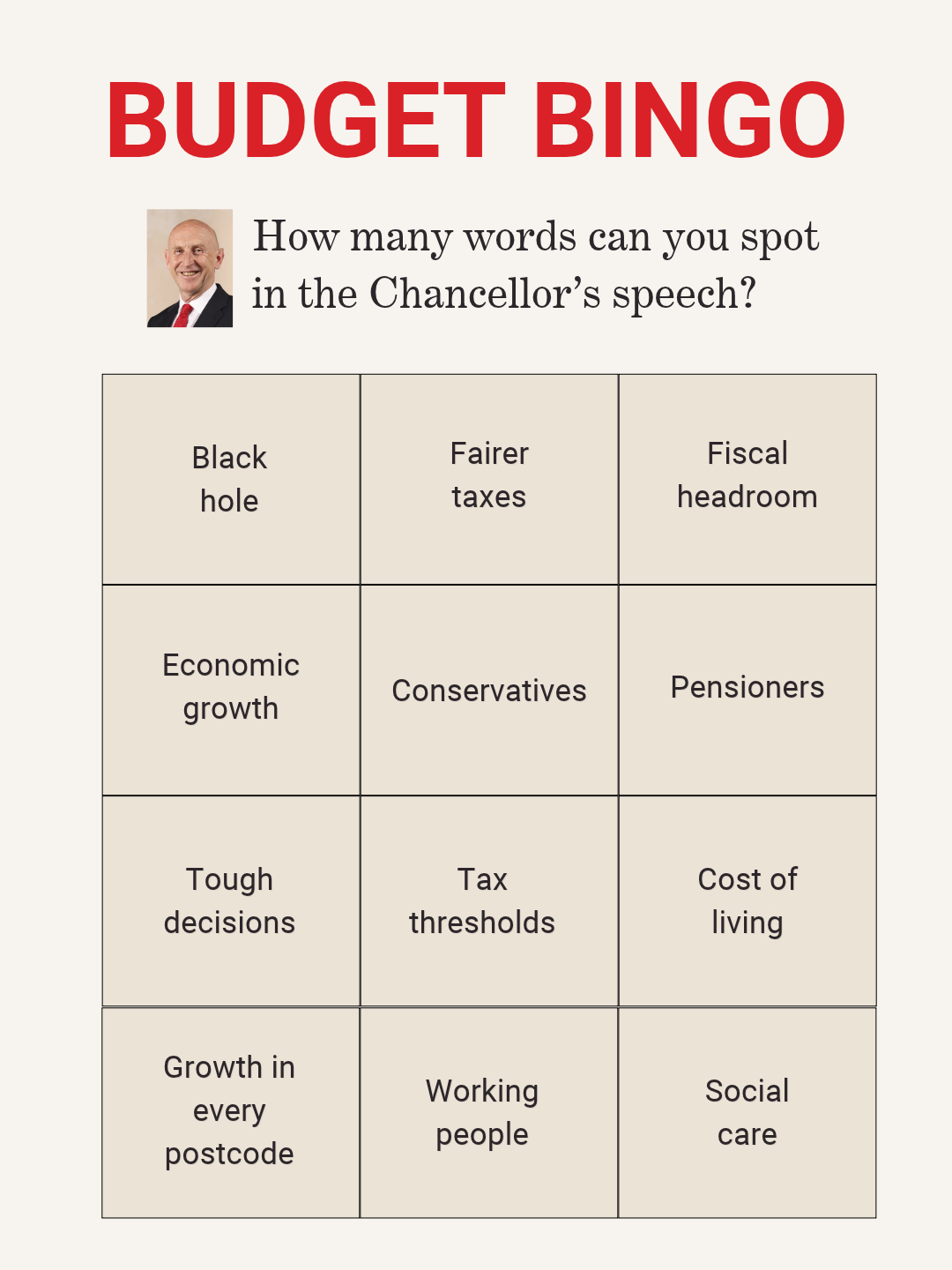
Budget bingo: 12 things to look out for
How many of these terms can you spot at John Healey’s Budget speech today?
Bond markets little-moved by pre-Budget rumours
While the reversal of Healey’s predecessor Rachel Reeves’s proposed cash ISA shake-up as well as the removal of the gas standing charge will be significant news to UK consumers, the bond market has taken the news so far in its stride.
Yields on 10-year UK government bonds (gilts) are up by just 0.04% compared to yesterday’s close, with markets anticipating minimal levels of disruption.
“Barring any nasty surprises lurking in the small print… All signs point to a cautious Budget that leaves the bond vigilantes with little to do,” said Matthew Ryan, head of market strategy at global financial services firm Ebury.
Ryan expects that Healey’s main challenge in terms of keeping bond vigilantes placated will be rebuilding the fiscal headroom that recent gilt yield spikes have eroded. “We think a buffer of around £15 billion should be enough to keep bond traders onside,” he said.
Shadow chancellor says Britain is facing a “fiscal cliff edge”
Andrew Griffith, the shadow chancellor, has said the government is facing a “fiscal cliff-edge” and needs to make big announcements at the Budget.
He said: “Taxes are at record highs. Debt is £3 trillion. Welfare is out of control. Our armed forces are not properly funded.
“John Healey must take tough decisions today. If he kicks the can down the road, we will all pay for it.”
How much do you know about the UK’s chancellors?
The Budget will begin in roughly 20 minutes. In the meantime, test your knowledge on the UK’s current and former chancellors in our quiz.
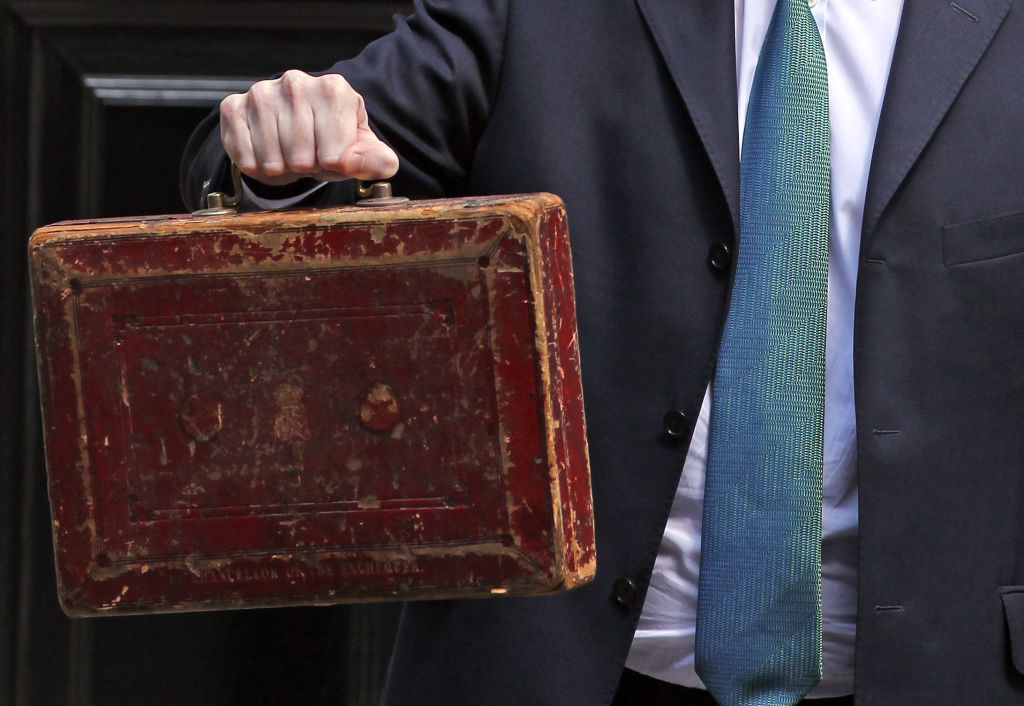
What is the red Budget box?
Historically, the Budget statement was brought to the House of Commons in a leather bag, but in modern times it has been held in a red despatch box or Budget box.
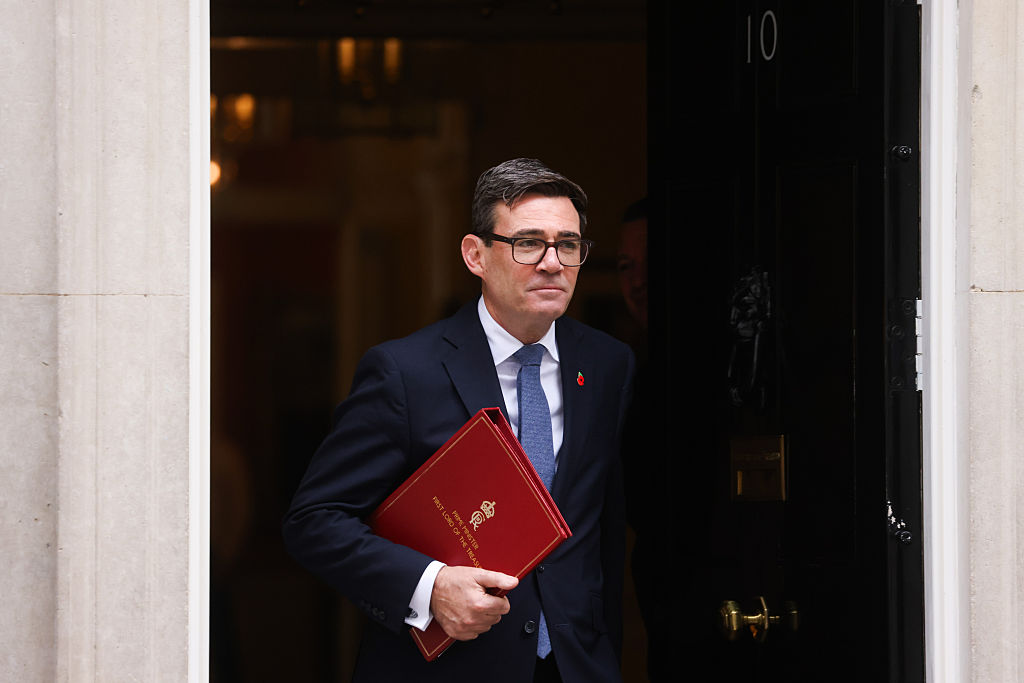
The red box is typically held up by the chancellor on the morning of the Budget in front of 11 Downing Street, the official residence of the chancellor of the exchequer.
The first time a box was used to carry the chancellor’s speech was for William Gladstone in 1860.
It was used for a further 150 years, including by George Osborne for his first Budget in 2010, but in 2011 he used a new one.
Martin Lewis: chancellor also looking at abolishing electricity standing charge
Consumer expert and founder of MoneySavingExpert.com Martin Lewis has welcomed the news the government will ditch the gas standing charge.
In a post on X, he said during a meeting with the chancellor this morning, John Healey had said he would talk to the regulator Ofgem about “how they get rid of the charge on electricity as well”.
Lewis said Healey said this would be “trickier” and will take longer to implement.
Standing charges are largely seen as unjust by the public. Research carried out by Ofgem in 2025 revealed 62% consider them unfair.
However, some people may be worse off by the removal of the standing charge as the cost of maintaining the energy network will be shifted to unit rates.
What is fiscal headroom and why is it important in the Budget?
Fiscal headroom is the amount of money the government can spend before it breaks its self-imposed fiscal rules.
The amount, which is set at every fiscal event, usually acts as a financial buffer against economic shocks and lets the government respond to events without having to draw up an entirely new Budget.
At the 2025 Budget, then-chancellor Rachel Reeves doubled her fiscal headroom to £22 billion, and increased it again to £23.6 billion at the 2026 March Spring Statement.
However, economic shocks – especially from the Iran war – have eaten away at this financial buffer.
Analysis by financial services firm EY estimates the government’s fiscal headroom has been halved to £11 billion, as conflict in the Middle East restricts the energy supply, drives up inflation, and weighs on growth.
At today’s Budget, chancellor John Healey is expected to announce fiscal headroom will be reduced from March’s level of £23.6 billion to around £15 billion.
What are the UK’s fiscal rules?
The government is bound by self-imposed restrictions on how it can adjust the public finances called the three “fiscal rules”.
The first fiscal rule says the current Budget must be on course to be in balance or surplus in 2029/30.
It means the chancellor is not allowed to fund public spending by borrowing money by the end of the current parliament, and that any borrowing done must only be used for investment.
The second fiscal rule says that net financial debt should fall as a share of the economy in 2029/30.
This means the government must plan to reduce the public debt, measured as a percentage of GDP, by the end of this parliament.
The final fiscal rule is that certain types of welfare spending must remain below a set level, also known as the welfare cap.
This fiscal rule adds extra constraints on the amount the government can spend on around half the total welfare bill .
Notably, pension payments and payments “sensitive to the economic cycle” like Jobseeker’s Allowance are not bound by the welfare cap.
Key times for Budget day
The day is ramping up after chancellor John Healey and his team at the Treasury posed for the traditional Budget day photo.
He is now on his way to parliament to prepare for his speech. Here’s what to expect from today.
12:00 Prime Minister’s Questions will begin in the House of Commons.
12:30 The chancellor will begin delivering his Budget, with his speech expected to last around one hour.
Leader of the Opposition Kemi Badenoch will respond to the Budget.
14:30 The Office for Budget Responsibility (OBR) will hold a press conference and publish their latest economic forecasts.
Test your knowledge in our Budget quiz
Today’s Budget is one of the most important days so far for the new Burnham government as it sets out its fiscal plan for the UK.
But how much do you know about the history and traditions of the Budget? Test yourself in our quiz.
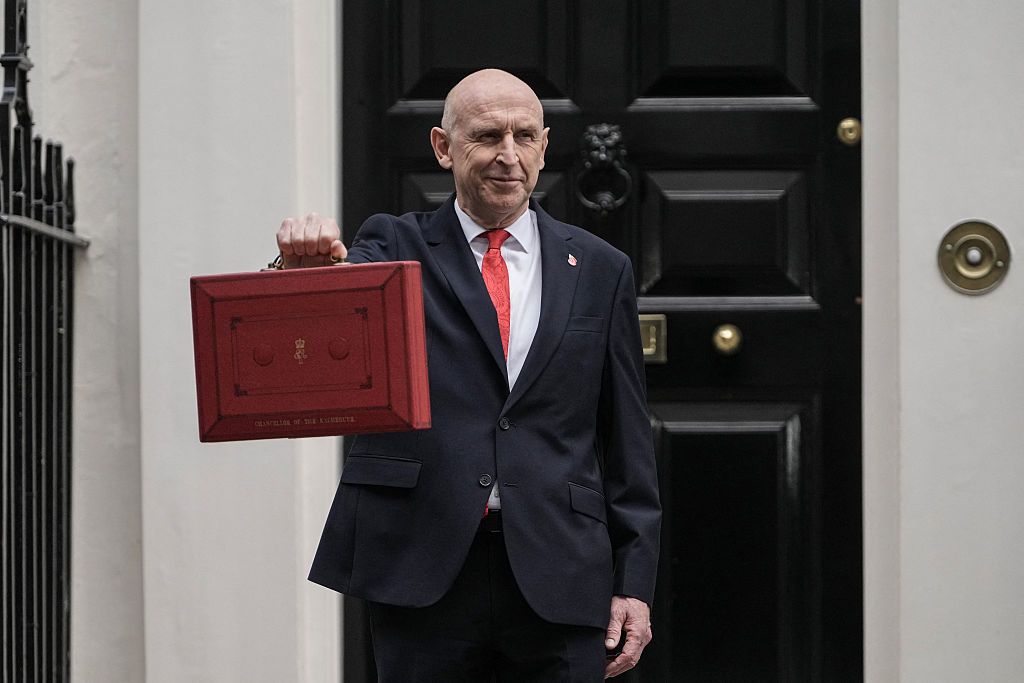
Chancellor John Healey leaves Downing Street
Chancellor John Healey has been pictured outside Downing Street, carrying the famous red Budget briefcase.
He will deliver his Budget speech at around 12.30pm, following Prime Minister’s Questions.
Which taxes won’t be raised today?
It is widely expected that taxes will rise in today's Budget, but there are certain levies we can be almost certain the chancellor won’t touch.
Labour’s 2024 manifesto explicitly stated that the government would not raise the “big three” taxes of income tax, employee’s National Insurance, or VAT.
Although the party elected on that manifesto has changed leader, it is still bound by the promises made in it.
In his first days as prime minister, Andy Burnham clearly said he would stick to the manifesto pledge that the three main taxes will not be increased.
Similarly, chancellor John Healey reiterated this in September, saying: "We made very strong, very clear, very specific commitments in our manifesto in 2024 on tax. That was what the public backed. That is what we're keeping."
With both the prime minister and the chancellor explicitly saying they will not break the Labour manifesto’s main tax promise, it is very unlikely that income tax, National Insurance, or VAT will be raised today.
Send MoneyWeek your Budget questions
Do you have a question about the Autumn Budget which you’d like a financial expert to answer? Get in touch by emailing editor@moneyweek.com and your query could be featured in our Budget live report.
What has already been announced?
The government has already made a string of announcements ahead of the Budget today.
On Monday (26 October), the Treasury laid out five “everyday fixes” to give people “breathing space”.
Prime minister Andy Burnham said: “We are taking on the big challenges facing the country. But that doesn’t mean losing sight of the everyday problems that cost people money or simply aren’t fair.”
Among the fixes is a pledge to lock in tax-free mileage rates, which apply to those who use a car or van through work.
Meanwhile the Carer’s Allowance ‘cliff-edge’, which sees unpaid carers lose their eligibility for the benefit as soon as they earn over a weekly earnings threshold, will be scrapped and a taper applied instead.
The government also announced it is removing import tariffs on over 100 everyday products. It said this will save consumers £21 on their food shop each year.
Today (28 October), the government announced the gas standing charge will also be ditched and added to unit prices in 2027, or as soon as possible after.
The standing charge is used to cover the cost of maintaining the energy network, including wires and pylons, supplier costs and funding environmental schemes.
The government said the move could help 60% of households save an average of £45 per year.
Prime minister Andy Burnham said abolishing the standing charge was about “basic fairness and giving people more control over their bills”.
Gareth Kloet, energy at comparison site Go.Compare Energy, said households that use less gas are “likely to pay less overall, while those with higher gas consumption could end up paying more”.
He added: “For many customers, the change could mean having greater control over their energy bills, as more of what they pay would be linked directly to how much gas they use. It also gives households a bigger financial incentive to reduce their consumption where possible.”
Among other announcements, the government has also confirmed that the triple lock mechanism will be scrapped from 2030 if Labour wins the next election, VAT will be removed from domestic electricity bills from 1 October and a new Your First Home scheme will replace Help to Buy.
Andy Burnham leaves Downing Street
Prime minister Andy Burnham has been pictured leaving Downing Street. He will appear at Prime Minister’s Questions in the House of Commons at around 12pm today. Chancellor John Healey will deliver the 2026 Autumn Budget shortly after.
How worried about the Budget are MoneyWeek readers?

readers are not looking forward to today’s Budget, according to a snap poll of more than 1,000 readers.
The majority of respondents said they are “worried” about the fiscal event.
Of the 1,237 readers who voted, 1,016 (82%) said they were either “slightly worried” or “very worried” about the Budget.
Just 10% of respondents said they were indifferent about the Budget, while only 8% said they were at least slightly looking forward to it.
Plans to cut cash ISA limit to £12,000 set to be scrapped
Chancellor John Healey is set to scrap plans to cut the annual cash ISA allowance for under 65s from £20,000 to £12,000 as part of today’s Budget, according to the .
The limit was due to be reduced from April 2027 under plans by previous chancellor Rachel Reeves, in a bid to get savers putting their money into UK stocks instead. However, Healey is said to believe it would be better to educate people on the advantages of investing rather than cutting tax breaks on savings.
The planned cash ISA reforms have faced criticism, with the Building Societies Association warning they could push up mortgage costs. Building societies rely on cash from savers to fund mortgages.
Others have warned the reforms would make the ISA regime too complicated.
Tom Selby, director of public policy at investment platform AJ Bell, said: “While the central aim of encouraging more people to invest for the long-term was the right one, the route Healey’s predecessor chose to achieve this was painfully convoluted, hardening the border between short-term saving and long-term investing and adding overwhelming complexity – not to mention a tax charge – into the system in the process.”
It's not long to go until chancellor John Healey delivers his first Budget. Ahead of the speech, the team has shared what they'd like to see in the 2026 Autumn Budget.
“Scrap stamp duty on shares”
If the government really wants to boost the UK economy and get people to invest more in UK stocks, then scrap (or reduce) the Stamp Duty Reserve Tax (SDRT). Currently, shares over £1,000 are subject to a 0.5% charge, but removing the taxation on UK-listed equities could mean investors are more likely to support UK companies. This could aid the boost to the UK economy that the government desperately wants.
“Scrap the upcoming ISA changes”
ISAs are set to become even more complicated next year, when a new cash ISA cap comes in. Announced by then-chancellor Rachel Reeves in the 2025 Autumn Budget, under 65s will be limited to putting up to £12,000 a year into cash ISAs. They will still have the overall £20,000 ISA annual allowance.
To close loopholes, the government is also introducing new restrictions on transfers from investment ISAs into cash ISAs, a new 22% tax charge on any interest paid on cash held in a non-cash ISAs, as well as rules relating to money market funds and additional reporting rules for ISA managers.
The government said it wanted people to invest more, but I don’t think making ISAs a whole lot more complicated is the way to go about it. I believe many people will be put off by the extra rules and instead stick with cash savings. Plus, the extra reporting and new rules sound expensive.

“Stop the tax tinkering”
A complicated tax system isn't good for business, investment and economic growth, which is why I think chancellors need to stop tinkering with it.
A report by the National Audit Office (NAO) last year found an increasingly complex tax system has added hundreds of millions of pounds in admin costs alone onto the government.
Small changes by successive chancellors in Budgets may not seem dramatic, but combined make everything more intricate than it needs to be.

“End the ridiculous childcare cliff-edge for high earners”
Once you earn over £50,270 you are saying goodbye to 40p of every £1 you earn over the threshold. That climbs to 45p in every £1 once you earn over £125,140.
These tax bands are already high, but what many people don’t realise is that there is an extra, hidden tax band that means those earning between £100,000 and £125,140 are stuck paying an effective marginal tax rate of 60% because you lose the personal allowance at a taper rate.
Once you breach the £100,000 threshold, certain government benefits are taken away from you too.
This is particularly harmful when it comes to childcare. The moment you earn over £100,000, you automatically lose access to the 30 hours of government-funded childcare as well as the tax-free childcare scheme. Additionally, earning over £80,000 means you lose all Child Benefit.
Collectively, it means a family with two young children will lose around £30,000 a year worth of financial support if a single parent earns even a penny over the £100,000 threshold, according to analysis by AJ Bell.
There is a genuine discussion to be had about what the maximum marginal tax rate should be, but you cannot make a convincing argument that the cliff-edge is fair. It only serves to punish younger families for choosing to have children and disincentivise hard and productive work.
Gas standing charges to be scrapped from 2027
Standing charges are set to be removed from gas bills from next year, which could save 60% of account-holding households £45 a year, the Treasury has said ahead of the Budget.
The chancellor will ask the energy regulator Ofgem to incorporate the standing charge into the unit price of gas instead of making it a separate charge.
This will mean households who use more gas will pay more, while those who use less will pay less. Electricity standing charges will remain in place.
The Treasury said the charges will be removed from 2027, “or as soon as possible after”.
The move, which will affect around 23 million households in the UK, comes after significant hikes in the Ofgem energy price cap this year and steeper increases are expected in 2027.
Standing charges are fixed daily fees on your energy bill, paid no matter if you use any energy. Even if you don’t use a single unit of gas in a day, you will still pay a standing charge, currently worth an average of around 30p a day, or £108 a year.
Chancellor John Healey said: “Gas standing charges are unfair and outdated so I am scrapping them to give millions of households a bit of breathing space.
“My Budget will draw a line in the sand on an energy policy that has failed British billpayers for years, letting extra costs on bills pile high and leaving households even more exposed to global shocks.”
It is the third energy price intervention announced this year, coming after the former Starmer government lowered energy prices by scrapping certain green levies last year, and prime minister Andy Burnham removed VAT on electricity bills for six months from 1 October.
Craig Lowrey, principal consultant at energy consultancy Cornwall Insight, said the policy was a “broadly progressive” move that may help lower income households – although it probably won’t be brought in in time for this winter.
However, he added: “Given the timeline, it is unlikely to ease the high costs this winter, and the savings will be small compared with recent bill rises, but with the cost of living still hitting budgets, any reduction will be welcome when it comes.”
Lowrey warned some households will end up worse-off by the change though.
“There are trade-offs, however, as the money still has to be recovered. Higher unit rates mean people in badly insulated homes, larger families or those who need to keep the heating on to manage a health condition, could end up paying more.
“Some of them are the same vulnerable households this policy is meant to help, so making sure that they see the intended benefits of this change will be essential."
Healey promises breathing space and “fresh hope for the future”
Chancellor John Healey has pledged to offer breathing space and “fresh hope for the future” to households across the UK.
In a video address to the public, the chancellor pointed to the conflict in the Middle East pushing up energy prices and the cost of living, but focused on “resilience”.
“Britain's economy is showing real signs of resilience: investments [are] up, productivity is growing, and we had the joint fastest growth in the G7 in the first half of this year,” he said.
“We can't stop these shocks that hit Britain, but we can make Britain more resilient when they do.”
Healey went on to say how his first Budget will give households breathing space from higher everyday costs, provide support to the self-employed, and “start the long-term action needed to get energy costs down for good”.
He also threw his weight behind businesses and entrepreneurs, saying the government will invest in technology to “drive future growth”, build more homes and decentralise power so leaders “can drive growth in every postcode”.
Meanwhile the chancellor committed to strengthening national security and the country’s defences.
He finished: “This Budget is about getting through this difficult moment. But it's also about putting Britain on a future path, a better future path. Breathing space today, and fresh hope for the future.”
Hello and welcome back to our 2026 Autumn Budget live report.
There are just hours to go until chancellor John Healey delivers his first Budget speech in the House of Commons.
Follow our report as we look at what could be announced, as well as live coverage of the Budget as it happens from 12:30pm.
Our financial experts will also be explaining what the Budget means for you and your money.
How do you feel about the Budget?
Thank you for following our live coverage ahead of tomorrow’s Autumn Budget.
We will pause our live report for today, but make sure to come back to this page tomorrow morning for the latest Budget news, analysis, and commentary.
We’d like to know how you are feeling about the Budget – let us know in the poll below.
Ask an expert
Healey 'to increase minimum wage to over £13 an hour for the first time'
The minimum wage is set to rise to over £13 an hour for those aged 21 and over, according to reports in .
The national living wage, which applies to workers aged 21 and over, is expected to increase from £12.71 to £13.20 an hour, an increase of 3.9%.
However, the increase will reportedly not be extended to workers under the age of 21 following warnings that young people are being priced out of the labour market.
Housing market struggles
The property industry will be hoping for some relief in the 2026 Autumn Budget amid a struggling housing market.
Annual house prices fell in 37 out of 119 postcode areas in the year to September 2026, with 27 of these areas (73%) based in southern England and London, research by property portal Zoopla found.
The figures come as higher mortgage rates, brought on in part by conflict in the Middle East, are making buyers cautious and a glut of homes gives sellers less room to negotiate on price.
Richard Donnell, executive director at Zoopla, said creating conditions for lower mortgage rates, which have surged close to 6% since the start of the conflict, would offer the biggest boost to the housing market.
He added: “Changes to stamp duty could support buyers and sellers, particularly in southern England where transaction costs are highest. The Your First Home scheme is positive for the new homes industry and, if designed well, could stimulate demand and support wider housing market activity in 2027.”
How do you feel about the upcoming Budget?
Tell us how you feel about the 2026 Autumn Budget by voting in our poll.
State pension set to rise by 3.9%
The chancellor is expected to announce that the state pension will rise by 3.9% for the 2026/27 tax year at the Budget.
The increase will mean those on the full new state pension will receive £250.70 a week, or around £13,036 a year.
Under the triple lock, the state pension increases in line with the highest of earnings growth in the three months to July, inflation in the year to September, or a flat 2.5%.
As earnings grew at 3.9% in the quarter to July 2026 and inflation was 3.5% in the year to September 2026, the triple lock means the state pension will rise by 3.9%.
Capital gains tax rises off the table
The chancellor was reportedly looking at increasing capital gains tax rates in the Budget.
Two current members of the cabinet, Louise Haigh and Wes Streeting, have called for rates to rise closer in line with income tax.
However, such a move is now said to be off the table, with the chancellor wary of discouraging investment and growth in the economy, reports.
The government is keen to nurture a retail investing culture in the UK, having launched its Savvy Squirrel campaign in the Spring.
Play our Budget crossword
Are you ready for the Autumn Budget? Test your knowledge on key financial terms by solving the Budget crossword.
The economic background to the Budget
The UK economy has struggled with high inflation, low growth, and poor productivity for years, but at the start of 2026 it looked like the economy was slowly recovering.
However, the Iran war, which began on 28 February, has hit economies all around the globe.
For the UK, inflation has been a particularly important issue.
Price growth has been above the Bank of England’s 2% target for almost every month since the start of the cost of living crisis in 2022.
Going into 2026, it was expected inflation would return to the target rate by the end of the year, but because of the inflationary impact of the Iran war, inflation is on the rise again.
The latest official inflation figures showed the Consumer Prices Index (CPI) rose by 3.5% in the 12 months to September, up from 3.1% in the year to August.
Experts forecast inflation to average 3.75% in the third quarter of 2026, and rise to 4% in the first quarter of 2027 before gradually falling next year.
Economic growth has also been slow. While the first quarter of 2026 marked faster-than-expected GDP growth, the Iran war meant growth over the rest of the year has been slower.
In the month to August, the UK economy grew by just 0.1%, down from 0.4% growth in the month to July.
On a quarterly basis, the UK economy grew by 0.6% in the first quarter of 2026 and 0.5% in the second quarter.
At the same time, the UK has been dealing with high unemployment. The latest set of labour market data, published on 20 October, showed unemployment fell to 4.7% in the three months to August, down from 4.9% in the three months to July.
Meanwhile, average earnings in the UK have grown very slowly all year. In the three months to August, annual wage growth was 3.7% for both regular earnings (excluding bonuses) and total earnings (including bonuses).
With a slow economy, the government collects less money through taxation as individuals and businesses are earning less.
If the government doesn’t have enough money to fund its projects, it can do one or a combination of three options: borrow more money, increase taxes, or cut spending.
At the Budget, we will find out which of these options chancellor John Healey will go with, though experts are warning that taxes may be set to rise.
What would you like to see in the 2026 Autumn Budget?
Let us know what financial policies you would or wouldn’t like to see in the 2026 Autumn Budget. Get in touch by emailing editor@moneyweek.com and your thoughts could be featured in our Budget coverage.
Could the personal allowance rise?
There’s been speculation that the chancellor may consider cutting taxes by increasing the personal allowance at the Budget.
The tax-free personal allowance means you don’t have to pay any income tax on the first £12,570 you earn every year.
In his first days as prime minister, Andy Burnham told journalists he would look at increasing the personal allowance, but no official plans to do this have been announced.
In the summer, energy entrepreneur and influential Labour donor Dale Vince urged the government to raise the personal allowance to £15,570, around the level the threshold would be by now if it had kept pace with inflation.
Historically, the personal allowance, along with all income tax thresholds, were increased every year to keep up with inflation.
However, income tax thresholds have been frozen since 2021, as a tax-raising measure called fiscal drag.
It means workers are being dragged into paying tax on more of their income as earnings rise over time, even if they rise slower than inflation.
Will low-income pensioners be protected from income tax in Budget?
Pensioners on low incomes won’t need to pay income tax on money they get from the state pension next year, according to reports.
The full new state pension is set to rise to £13,036 a year thanks to the triple lock, meaning it will breach the £12,570 tax-free personal allowance for the first time.
Under normal circumstances, this would trigger a small income tax bill.
However, as promised in the 2025 Autumn Budget, Healey will reportedly say the government will not tax pensioners who solely get the state pension if their state pension income breaches the personal allowance.
Instead, a new tax threshold for low-income pensioners will be introduced, reports, meaning these pensioners would not pay tax on the £466 of full new state pension that is above the personal allowance.
Reports suggest the new allowance will increase in line with increases to the state pension until at least the end of this parliament in 2029.
Budget to target “everyday fixes”
The Budget will include a number of policies that are styled as “everyday fixes”, the government confirmed last night.
The suite of policies primarily target small cost of living fixes, like helping lower the price of groceries to provide “breathing space” for households.
Chancellor John Healey said: “Today's everyday fixes are just a small part of what we are doing to give families a bit of breathing space. Conflict in the Middle East and Europe is hitting families here at home through higher everyday costs.
“We can’t control global events, but we can act where we can make a difference.”
Prime minister Andy Burnham added: “At Wednesday’s Budget, we’ll go further to give families and businesses the breathing space they need today, while we build a stronger economy, transform our country and bring down cost for people long-term.”
Tax-free mileage rates to be increased
Tax-free mileage rates are set to be increased in the Budget as part of a suite of policies that the government describes as “everyday fixes”.
The rates dictate how much money a firm can reimburse an employee for driving per mile without having to pay tax.
Former chancellor Rachel Reeves announced in May that mileage rates would increase from 45p to 55p for the first 10,000 miles in a tax year and 25p for miles above 10,000.
Now, new chancellor John Healey is set to increase the rate for miles above 10,000 to from 25p to 35p per mile.
The government says the move will help three million people who use their own vehicle to travel for work.
Import tariffs to be removed on over 100 products
The chancellor is set to announce that import tariffs will be axed from over 100 products at the Budget.
The move will lower the cost of staples such as baked beans, chocolate and gherkins, and other pantry staples.
Along with other tariff cuts announced in the Spring, the move is expected to save households up to £21 a year.
Carer’s Allowance cliff edge to be removed
Those who care for their loved ones will no longer lose their entire Carer’s Allowance entitlement when their earnings breach the weekly limit.
Under current rules, earning even a penny over the weekly limit of £204 will mean you become ineligible for any additional support from the government through Carer’s Allowance.
However, the chancellor is set to announce that this cliff-edge will be axed at the Budget.
Instead, the allowance will taper away by £1 for every additional £1 earned over the weekly limit.
Hello and welcome to our live coverage of the Autumn Budget.
Chancellor John Healey is due to kickstart his first Budget at around 12.30pm on Wednesday 28 October.
reporters will bring you all the latest news and speak to the experts to bring you details on what the announcements mean for your finances.
We haven’t had many leaks from the chancellor, but here’s a recap of what we know so far:
- State pension triple lock mechanism will change in 2030 if Labour wins the next election
- A 3.9% state pension rise from April 2027 most likely to be confirmed
- VAT removed from domestic electricity bills from 1 October
- Proposals are in motion to change the Lifetime ISA in 2028, to be replaced with a new First Time Buyer ISA
- Bus fares capped at £2
- Your First Home scheme to replace Help to Buy
- Reports suggest capital gains tax will not be hiked to be in line with income tax
The chancellor has some ‘headroom’ – a cash buffer the government has to meet its fiscal rules – but inflation and increased borrowing costs amid rising gilt yields mean this may now be at £11 billion, down from £24 billion, according to the Institute for Fiscal Studies.
This will inevitably add pressure to the chancellor as he will have to find funding either through taxes or welfare cuts. This will be a Budget to watch closely.