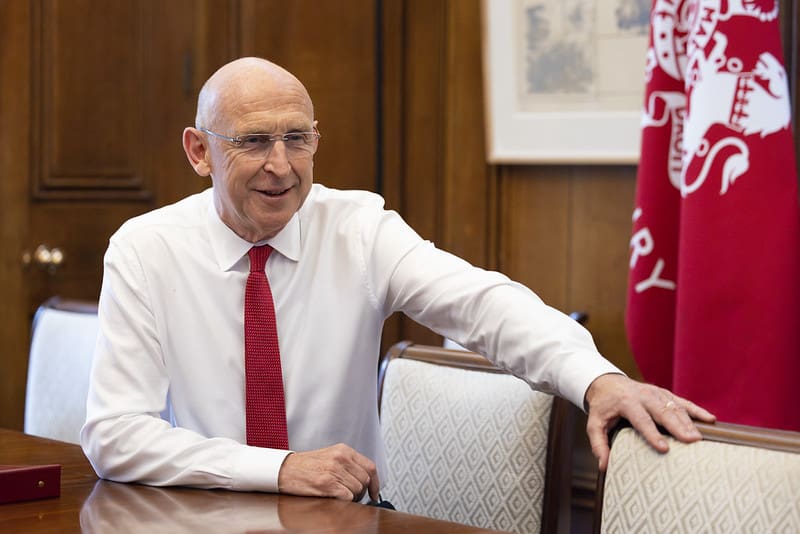
The Autumn Budget 2026 is happening on 28 October, around a month earlier than last year’s Budget.
It’s the first for new Chancellor, John Healey, after his appointment from Prime Minister, Andy Burnham. The economy grew by 0.7% in the three months to August, but inflation rose to 3.1% due to fuel and energy prices. Economic growth is expected to slow in the coming months as these prices, among others, put pressure on businesses and households.
Job vacancies fell by 21,000 to 691,000 in the three months leading up to September. The Office for National Statistics (ONS) said recruitment costs were a key factor in scaling back for smaller businesses.
Details are a little thin at the moment as there are fewer leaks compared to previous years, but we’ll be updating this article as we find out more.
What could happen in the Autumn Budget 2026?
Business rates cut
Well, the only measure confirmed for small businesses so far is 20% knocked off business rates for pubs, clubs and live music venues from April 2027. More details will be revealed at the end of October.
Wider reforms to business rates may also be on the cards, including a larger business rates bill for warehouses.
Permanent tax-free mileage rate for those driving for work
The government announced a 55p per mile tax-free mileage up to 10,000 miles applying to those who travel for work.
More Post Office drop boxes
There’s due to be an announcement of hundred of extra Post Office drop boxes to make it easier to send parcels, including for those who run side businesses.
Self-employed dads are due to get two weeks’ paternity pay of up to £194 a week after their baby is born. This sum will be paid to other eligible parents who would have previously missed out on this money.
Tax crackdown
The chancellor is planning a tax crackdown on online retailers, according to The Times. Amazon, Temu, eBay and other online marketplaces will reportedly be responsible for collecting VAT owed by retailers who sell on their platform and have a turnover above £90,000. It’s primarily aimed at international sellers who abuse the rules to dodge VAT. The move is expected to raise as much as £1 billion, which will be used to cut business rates for high street shops.
Fuel duty
The Conservatives froze fuel duty in 2022 and the Starmer government extended the freeze until the end of 2026. Healey has confirmed that he will continue the freeze.
On top of tariff reliefs introduced by Rachel Reeves earlier this year, more food import tariffs are being cut. Family favourites are included: baked beans, gherkins, garlic and maramalade. Tariffs are also being cut on fertilisers, which is a glimmer amongst a barrage of bad news for farmers recently.
Small breweries
There’s been talk about nationalising small breweries but detail is scant at the moment.
A rise in the National Living Wage is usually announced for the following tax year. There hasn’t been any word from the chancellor, but the Low Pay Commission recommended a rise of 3.7%, which is a smaller increase than the past two years. That would mean going from the current £12.71 per hour to around £13.18 per hour. Nothing has been confirmed yet, but reported that it will go up to £13.20, which is a 3.9% increase, for older adults. For 18-20-year-olds, it’s likely to rise by 3.9%, from £10.85 to £11.27 per hour.
Cutting red tape
On October 23, announced plans to slash red tape, saving businesses almost £800 million per year. The news was first floated in early September. Proposals include:
- Compliance guidance becoming clearer and simpler
- Further simplifying the UK’s corporate reporting requirements, reducing them for businesses
- Extending import tariff suspensions on products favoured by business
The consultation opened last month and is running until the end of November, so there’s still a chance to share your opinion. Read more in Ministers plan to cut paperwork for SMEs.
As the consultation is ongoing, Healey is unlikely to make any concrete announcements in the Budget. However, he may mention it to curry favour with small businesses.
Rise in capital gains tax rate
There has been some speculation around aligning capital gains tax rates with income tax rates, but Healey confirmed that there will be no rise in Capital Gains Tax.
Other taxes
Labour’s 2024 manifesto promised that corporation tax would stay at 25%. Full expensing and the annual investment allowance would also be retained as in line with Labour’s pledges. However, with such an uncertain economic backdrop, tax could come up in the Budget.
There’s been speculation that holiday lets will be taxed as second homes rather than as businesses. A move like this could cost owners between £1,000-£3,000, the chairman of the Professional Association of Self-Caterers told The Telegraph.
See also: Is it worth opening a holiday let?
Remember that if you’re earning over £30,000, you’ll have to do Making Tax Digital from April 2027. Those earning over £20,000 have until April 2028 to comply.
See also: Making Tax Digital – what actions small firms need to take now